
Why Am I Not Tanning Anymore?
You’ve spent months, maybe even years, building up a gorgeous, natural tan, but all of a sudden, your skin stops darkening, and you are stuck at the same tan color no matter what you do.
Many people have found themselves in a position where their skin refuses to tan, even if they spend more time in the sun.
So, why do you no longer tan?
One reason you would stop tanning at a certain point is if you have reached your tanning plateau. There are various skin types, and all have a plateau where their skin will stop tanning and where it cannot get any darker. However, other factors may also prevent you from tanning too much.

There are several reasons why your skin may stop tanning at a certain point, and understanding these reasons, along with your skin type, can help you overcome this and further develop your tan.
Why Your Skin Stops Tanning
To understand why your skin won’t tan anymore, you need to look at the various reasons that could be causing it and see which you think relates to you.
There are several factors that contribute to achieving a good, natural tan, and some of them are not as obvious as others.
These are some of the reasons why you might not be tanning any further, and why your skin is prevented from getting darker:
Tanning Plateau
The more you tan, the thicker your skin becomes. The tanning plateau for various skin types differs, but once you reach this point, it can be difficult to tan any further.
As your skin darkens, it becomes thicker and more resilient.
It eventually reaches a point where your skin is so thick that the UV rays cannot penetrate through the upper layers, and further tanning cannot occur.
At this point, you are only causing further damage to your skin by staying in the sun, trying to tan, and you will not actually achieve anything other than damage.
If you notice that your skin will not tan any further and you think it might be because it has tanned too much and become too thick, then it is best to take a break from the sun for a while.
High Sunscreen Protection

It is always recommended to wear sunscreen, even when tanning. When tanning in the sun, use an SPF 15 or SPF 30 sunscreen, depending on your skin type.
Wearing sunscreen when tanning helps to prevent sunburn, but using the right level of protection means you can still develop a tan.
One obvious reason you might not be tanning anymore is if you are using sunscreen that is too strong, which gives your skin too much protection and prevents it from tanning.
As you build a tan, your skin develops natural protection against the sun’s harmful effects. This, along with the sunscreen, may help prevent you from tanning further.
You should always practice safe tanning, but if you think that your sunscreen might be too strong, you can use lower protection for a tanning session and see how it goes.
Make sure to simply use lower protection, not zero protection at all.
Tanning Time
Your skin develops a natural resistance to the sun once it has been tanned for some time, and when a base tan has been developed.
The minimal sun protection offered by a base tan can actually have an impact on how well you tan over time.
If you usually spend 15–30 minutes out in the sun, this might not be enough anymore if you have developed a darker tan.
You may need to extend your tanning time by a few minutes or tan more frequently.
Increase your time spent in the sun gradually and minimally, as you don’t want to overexpose yourself and end up with a sunburn.
The Wrong Clothing
Your clothing might be stopping you from tanning further.
If you choose to wear a shirt or a full-coverage swimsuit when tanning, these could definitely get in the way of developing a tan.
There are certain types of clothing or swimsuits that allow you to tan through the fabric, but many don’t.
Consider changing the clothes you tan in for smaller options, or look online for tan-through swimwear or clothing that will allow you to still feel covered up while developing a tan.
Increased Water Intake

Did you know that your water intake can affect how you tan? Your skin needs to be hydrated in order to tan effectively, and drinking more water can help improve your tanning results.
When you have a healthy intake of water, your skin cells are hydrated, which improves the appearance of your skin, including reducing dark spots and enhancing its glow.
Being hydrated also means that your skin will develop a deeper tan after being in the sun, and it will not just dry out and peel.
Not only can drinking enough water help you develop a darker tan, but you can extend the life of your tan by staying hydrated afterward as well.
How Do You Get Past A Tanning Plateau?
A tanning plateau happens when your skin has become too thick from previous tanning, and the UV rays cannot penetrate down far enough to help you develop a tan.
When this occurs, spending time in the sun trying to tan will only cause more damage and will make it more difficult to tan at a later stage.
Once your skin has reached this plateau and time in the sun does nothing, you might be looking for a different way to build on your tan.
The best way to do this is to use a tan accelerator or a similar tanning lotion. These can work wonders in helping your skin cells become more receptive to UV rays and develop a tan, even if your skin has become thickened through extended tanning.
Your skin would not only feel thick, but it would likely feel dry too.
Tanning lotions are packed with hydrating and nourishing ingredients, and when applied to the skin, they can help soften the skin, making it more receptive to UV rays.
These tanning lotions allow you to tan once again in the sun, and hopefully develop a darker color if that is what you are after.
There are three types of tanning lotions to choose from, depending on what you are looking for:
Tan Accelerators
Tan accelerators help to stimulate melanin production in the skin, which will give you a darker tan in a shorter amount of time. These also help you develop a tan once you have left the sun.
They are rich in hydrating ingredients, which provide the skin with a boost of moisture, making it more receptive to UV rays and allowing the skin to better utilize them to develop a darker color.
Not only are tan accelerators good for helping you get past a tan plateau, but they can also help to even out patchy areas and tan lines.
That’s What Sea Said: Tanning Lotion Accelerator
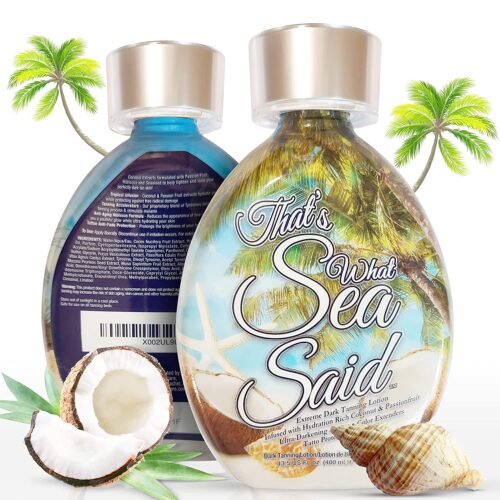
The That’s What Sea Said Tanning Lotion Accelerator is a great option to get past a tanning plateau.
It was formulated to help you develop a dark tan by being ultra-hydrating and moisturizing to the skin.
It contains no bronzer, so it will apply clearly to the skin. With the proprietary tanning accelerators, the lotion stimulates melanin production in your skin to accelerate the natural tanning process, while also including ingredients that keep your skin looking young and nourished.
Reaching a tanning plateau means your skin is likely dry, and this tanning accelerator contains all the hydration it needs to combat this.
Tingle Lotions
Tingle lotions work a little differently from tan accelerators, which deliver deep hydration to the skin, allowing it to tan more quickly.
Tingle lotions work by increasing blood flow to the skin’s surface, giving the skin a tingling sensation, which in turn allows you to tan more quickly.
Your skin may appear slightly redder when using this lotion, and this effect may persist afterward, as there is more blood at the skin’s surface.
However, the redness will gradually fade to a brown shade soon after. The presence of more blood results in increased melanin production and a darker tan.
Tingle lotions help you break through a tan plateau by encouraging more blood flow at the skin’s surface, allowing UV rays to penetrate more easily and develop a deeper, darker tan.
Devoted Creations White 2 Bronze Tingle
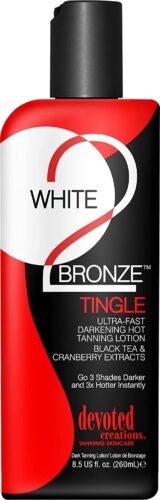
The Devoted Creations White 2 Bronze is a tingling lotion that creates an intense sensation on the skin, rapidly increasing blood flow and allowing the skin to produce more melanin, resulting in a darker tan that develops quicker.
With delightful rain-kissed leaves, fragrant and a tingling sensation on your skin, this might become your new favorite tanning lotion to help you pass a tan plateau!
However, this lotion is not suitable for those who rarely tan or have pale skin, as it is very potent and can cause irritation for sensitive skin types.
Bronzers
Bronzers are a mix between an instant tan and a tan accelerator.
You will benefit from hydration and nourishment with a bronzer lotion, which helps your skin make the most of UV rays and tan more effectively, while also giving you a temporary, dark glow.
Not everyone is a fan of bronzer lotions, as they can be difficult to apply evenly.
However, if you have reached a tan plateau and want an instant bronzed glow, they can really help achieve this, as well as provide some extra hydration to help build up a tan in the sun.
Australian Gold Dark Tanning Accelerator
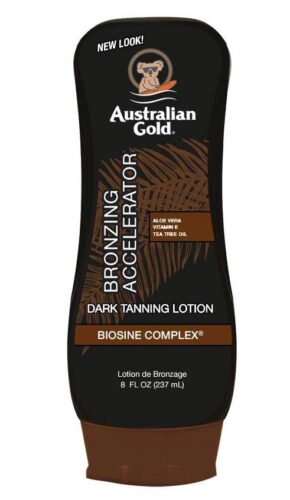
With the Australian Gold Dark Tanning Accelerator, you will achieve a deeper, darker tan, even if you think your skin has finished tanning.
The instant bronzer helps intensify your bronze glow as you tan, and rich Australian natural ingredients, such as Kakadu plum, help fight off free radicals to protect your skin from excessive damage.
The tanning intensifier contains a combination of advanced ingredients that help prepare the skin to tan more deeply, while still ensuring the skin remains hydrated and nourished throughout.
With the added bronzer, your skin will glow as you tan, and well after too.
Does Your Skin Stop Tanning At A Certain Point?
If you think your skin has stopped tanning and you are struggling to get it to tan darker, the last thing you should do is spend more time in the sun.
Melanin is what creates a darker pigmentation on the skin, resulting in a tan.
Melanin is produced when your skin is exposed to UV rays, but everyone’s skin has a melanin cut-off point, where no melanin will be produced after this time.
Usually, this occurs after around 2–3 hours in the sun, which is significantly longer than the recommended time spent in the sun.
After 2–3 hours, your skin will no longer darken, and you will simply increase the risk of sunburn and skin damage.
It is recommended to be out in the sun for 30–45 minutes if you have tanned, darker skin, as this is sufficient time to develop a tan without risking excessive damage to your skin.
How To Tan When You Have Stopped Tanning – Without The Sun
When your skin stops tanning, it is likely due to you spending too much time in the sun already, and your skin has become too thick from tanning. Once this happens, it is a good idea to take a break from the sun.
If you think avoiding the sun is best for your skin, but you still want a bronzed glow, consider using self-tanners or spray tans.
These are all safe, sunless ways to give your skin a radiant tan, without worrying about sunburn or skin damage.
You can also find the right tan tone to match your skin type, making it look as natural as a suntan would.
Why Am I Not Tanning Anymore?
There are several reasons why you may no longer tan, but one of the most common is that you have previously tanned excessively, and your skin has become too thick for UV rays to penetrate, so it doesn’t tan.
To counteract this, you should hydrate and moisturize your skin and use tanning accelerators or lotions to develop a tan in the sun.
These will help soften the skin and increase melanin production, resulting in a darker tan.
Once your skin has reached a tan plateau, it is a sign to take a break from UV exposure. Why not consider using a self-tanner or spray tan to develop a gorgeous, sunless glow going forward?
Related Questions
Why do I burn and not tan?
Your genes might play a big role in why you burn and do not tan.
Individuals with pale and fair skin tones typically have a lower level of melanin, which means their natural protection against the sun is reduced. This results in burning rather than tanning.
Why do my legs not tan?
Many people find that their legs do not tan as easily as other parts of their body.
This is because the skin on your legs produces less melanin than the rest of your body, which means that your legs cannot develop as dark a tan.
Related Articles
Why Don’t My Legs Tan As Well?


