
5 Best Sunscreens For Water Sports
If I were choosing one sunscreen from this list for a long day on the water, I would start with Banana Boat Sport Ultra SPF 50+. It offers broad-spectrum protection, is labeled water-resistant for up to 80 minutes, and the large pump bottle makes it practical for covering exposed skin generously and reapplying when needed.
Water sports put sunscreen through a lot. You are dealing with direct UV exposure, reflected light from the water, sweat, swimming, and towel drying, all of which make consistent application and reapplication especially important. The five options below are designed for active outdoor use, but the best choice depends on where you are using it, your skin type, and how you prefer to apply sunscreen.
Which are the best sunscreens for water sports?
The best sunscreens for water sports are broad-spectrum, have a high enough SPF for extended outdoor exposure, and are labeled water-resistant for 40 or 80 minutes. No sunscreen is waterproof, so reapplication still matters after swimming, heavy sweating, or towel drying.
Below, you will find five practical options for water sports, plus the features that matter most when comparing them. The goal is not just to pick the highest SPF on the shelf, but to choose a formula you can apply generously, tolerate on your skin, and reapply consistently throughout the day.
How To Choose The Best Sunscreen For Water Sports
Choosing sunscreen for water sports deserves a little more thought than grabbing whatever bottle is nearby. Long periods outdoors, water exposure, sweat, and missed reapplication can all increase the chance of sunburn.
Here are the things to consider when choosing the best sunscreens for water sports:
SPF
The SPF is one of the first things to check, but it should not be considered on its own. SPF mainly reflects protection against UVB, so you also want the label to say broad-spectrum for UVA coverage.
For a long day around water, SPF 50 is a practical choice because it gives you a little more margin when application is not perfect. That extra SPF does not mean you can stay out longer without reapplying, especially after swimming or sweating.

An SPF 50 or higher formula can work especially well for water sports, as long as it is also broad-spectrum and water-resistant.
SPF 30 is a common baseline for everyday sun protection, while SPF 50 is often easier to recommend for prolonged outdoor activity because missed spots and uneven application are common in real life.
Water-Resistance
For swimming, surfing, kayaking, paddleboarding, or any activity where you expect to get wet or sweat heavily, choose a sunscreen specifically labeled water-resistant. Check whether the label states 40 or 80 minutes of water resistance.
No sunscreen is completely waterproof. Even an 80-minute water-resistant formula still needs to be reapplied according to the label, especially after towel drying, extended swimming, or heavy sweating.
Broad-Spectrum
Look for the words broad-spectrum on the label. This means the sunscreen is formulated to protect against both UVA and UVB exposure, rather than focusing on UVB protection alone.
Reef-Friendly
If you will be swimming in the ocean, you may also want to check the ingredient list and local rules. Ingredients such as octinoxate and oxybenzone have been restricted in some destinations because of environmental concerns.
Keep in mind that terms such as reef-friendly are not a complete guarantee of environmental impact. If your destination has sunscreen regulations, checking the local requirements and the current product label is more useful than relying on front-of-pack marketing alone.
Sunscreen Type
You can choose between a few different sunscreen types, depending on what you find easiest to use.
Lotions are the most common type of sunscreen, but you can also choose between spray, gel, and stick sunscreens.
The best format is the one you can apply evenly and in enough quantity. Lotions make coverage easier to see, sticks are convenient for smaller areas such as the face, and sprays can be quick but still need careful, generous application to avoid missed spots.
Sensitive Skin
If you have sensitive or reactive skin, look beyond the SPF number and check the full formula. Fragrance-free options or mineral sunscreens may be more comfortable for some people, but individual reactions vary.
A sunscreen labeled for sensitive skin can be a useful starting point, but it is still worth patch testing a new formula before a full day outdoors if your skin tends to react easily.
Application Matters As Much As SPF
Even a high-SPF, 80-minute water-resistant sunscreen will underperform if you apply too little or miss easy-to-forget areas. Cover exposed skin evenly before heading outside, including the ears, back of the neck, shoulders, tops of the feet, and backs of the hands.
Reapply at least every two hours while outdoors, and sooner after swimming, heavy sweating, or towel drying according to the product directions. If you are using a spray, rub it in where the label instructs so you can see that the skin is evenly covered.
The Best Sunscreens For Water Sports
These five options combine high SPF, broad-spectrum protection, and formulas suited to active outdoor use. Compare the water-resistance time, texture, bottle size, and whether you need a face-specific or mineral formula before choosing.
| Rank | Product | Key Features | Where To Buy |
|---|---|---|---|
| 1. | Banana Boat Sport Ultra Sunscreen | Sweat and water resistant, lightweight, reef friendly | Check it on Amazon |
| 2. | Thinksport SPF 50+ Mineral Sunscreen | Natural mineral protection, SPF 50+, water resistant | Check it on Amazon |
| 3. | Neutrogena Beach Defense Sunscreen | SPF 70, water resistant, suits sensitive skin | Check it on Amazon |
| 4. | Coppertone Every Tone Sunscreen | Blends clear, no white cast, SPF 50, 80-minute water resistance | Check it on Amazon |
| 5. | Neutrogena Sport Face Oil-Free Lotion | SPF 70+, oil-free, made for the face | Check it on Amazon |
1. Banana Boat Ultra Sport Sunscreen
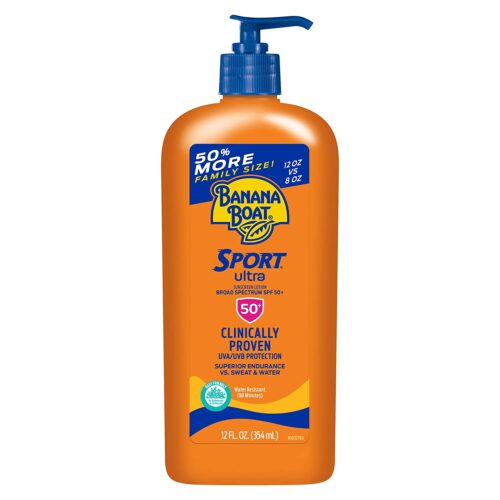
The Banana Boat Ultra Sport Sunscreen is the most practical all-around pick here for long days outside, especially if you need enough product for arms, legs, shoulders, and repeated applications.
It is made for active use and is labeled to resist water and sweat. That makes it more convenient than a non-water-resistant daily sunscreen, although it still needs regular reapplication.
It is broad-spectrum, so it is designed to provide protection across both UVA and UVB exposure when applied and reapplied as directed.
The lotion format is easy to spread over larger areas, which matters when you are covering your body rather than just your face. If you dislike heavy sunscreen, this style is generally easier to work into the skin than a very thick paste.
The sunscreen is labeled water-resistant for up to 80 minutes. Treat that as the maximum tested water-resistance window, not a reason to skip reapplication after towel drying or once you have been in the water for that long.
The formula is listed as free from oxybenzone and octinoxate, which may be useful if you are traveling somewhere that restricts those ingredients. As formulas can change, check the current label if a specific ingredient is important to you.
Best for: full-body use, families, and long outdoor days when a larger bottle is more practical than a small tube. The pump bottle is less convenient if you need something compact for a dry bag or carry-on.
2. Thinksport SPF 50+ Mineral Sunscreen

Thinksport SPF 50+ Mineral Sunscreen is the mineral option on this list, making it worth considering if you prefer a zinc-oxide-based sunscreen rather than an organic UV-filter formula.
It offers broad-spectrum SPF 50+ protection and is designed for active outdoor use, including swimming and sports.
Mineral formulas are often chosen by people who prefer zinc oxide or who find some other sunscreen filters uncomfortable. Sensitive skin can still react to any formula, so patch testing is sensible if irritation is a concern.
The ingredient list is one of this product’s main selling points, but broad labels such as reef-friendly or “clean” do not tell you everything about safety or environmental impact. Check the current label and local rules if either is a priority.
No sunscreen can guarantee that it will never irritate your skin. If you are prone to sensitivity, test a small amount first and stop using it if you notice persistent stinging, redness, or discomfort.
It is labeled water-resistant for up to 80 minutes, which makes it a strong fit for swimming and water sports when reapplied according to the directions.
Choose this one if you specifically want a mineral SPF 50+ with an 80-minute water-resistance claim. The tradeoff is that mineral lotions can feel thicker or leave more visible residue on some skin tones, so texture preference matters.
Best for: anyone specifically shopping for a mineral sunscreen. If a completely invisible finish is your priority, this may be less appealing than a lighter organic-filter lotion.
3. Neutrogena Beach Defense Sunscreen
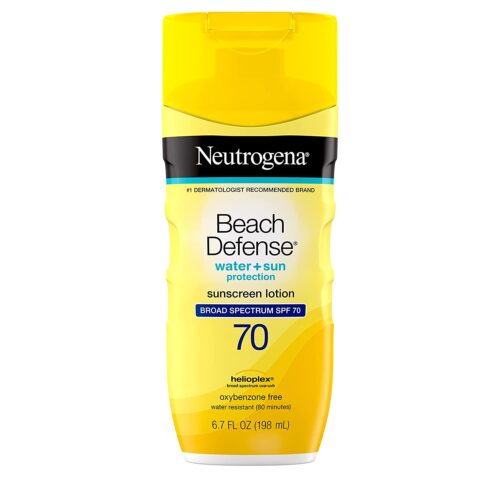
Neutrogena Beach Defense is a useful option if you want a higher-SPF body sunscreen in a conventional lotion format.
Its SPF 70 rating gives you high UVB protection when applied correctly, but the higher number does not mean you can stay in the sun longer or reapply less often.
The lotion is marketed with Helioplex technology and provides broad-spectrum protection, covering both UVA and UVB exposure.
The high-SPF lotion is labeled water-resistant for up to 80 minutes, which makes it suitable for active outdoor use and time in the water.
If you are sensitive to sunscreen ingredients or fragrance, check the current ingredient list before buying rather than assuming a high-SPF formula will suit every skin type. Texture is also personal, so a formula that feels light on one person may still feel noticeable on another.
Best for: swimmers and beachgoers who want a high-SPF body lotion. If you have reactive skin, the ingredient list matters more than the SPF number alone.
4. Coppertone Every Tone Sunscreen

Coppertone Every Tone SPF 50 is the best fit here if visible white cast is one of your main concerns. The lotion is designed to rub in clear, which can make frequent body reapplication less frustrating on deeper skin tones.
You get SPF 50 broad-spectrum protection and an 80-minute water-resistance claim, which is the maximum water-resistance duration commonly shown on U.S. sunscreen labels.
The formula is listed as free from fragrance, oxybenzone, octinoxate, PABA, and phthalates. That can simplify shopping if you are avoiding any of those ingredients, but always check the current bottle and destination-specific sunscreen rules before traveling.
The formula also contains vitamin E and has a lighter lotion texture. That can be useful when you need to reapply during a long beach or pool day and do not want a dense layer building up on the skin.
Best for: people who prioritize a clear finish and a lighter lotion feel, especially on deeper skin tones where visible residue can be frustrating.
5. Neutrogena Sport Face Oil-Free Lotion

If you are looking specifically for a facial sunscreen, the Neutrogena Sport Face Oil-Free Lotion is the most targeted option in this list.
It is designed for outdoor sports and active use, with water resistance that makes it more practical around water and sweat than a standard daily facial sunscreen.
That makes it useful for faces that are in and out of the water, but it still needs to be reapplied according to the label, just like body sunscreen.
The sports sunscreen is oil-free and PABA-free. If you are acne-prone, that may make the texture more appealing, although no sunscreen can guarantee that it will never contribute to congestion or breakouts for every person.
If ingredient restrictions matter for where you are swimming, check the current package against the local rules rather than relying on a general reef-related claim.
It is broad-spectrum SPF 70+, giving you high sun protection in a face-specific formula designed for active use. The main advantage is the combination of high SPF, an oil-free feel, and water resistance rather than the SPF number alone.
Best for: the face during running, swimming, or other sweaty outdoor activities. The smaller tube makes more sense for facial use than for covering the whole body.
The Best Sunscreens For Water Sports
For most people, the best sunscreen for water sports is the one they will actually apply generously and reapply on schedule. Banana Boat Sport Ultra SPF 50+ is the strongest all-around body pick here, Thinksport is the mineral option, Coppertone Every Tone is useful if white cast bothers you, and Neutrogena Sport Face is the most face-focused choice.
Whichever formula you choose, combine sunscreen with shade, protective clothing, sunglasses, and sensible reapplication. Water resistance helps a sunscreen stay useful during activity, but it does not make the product waterproof or eliminate the need to reapply.
Related Questions
Is water-resistant sunscreen good for swimming?
Yes. For swimming and water sports, choose a sunscreen labeled water-resistant for 40 or 80 minutes. No sunscreen is waterproof, so reapply according to the label, especially after swimming, heavy sweating, or towel drying.
How often should you reapply water-resistant sunscreen?
Reapply sunscreen at least every two hours while outdoors, and sooner after swimming, heavy sweating, or towel drying according to the product directions. An 80-minute water-resistance claim is a tested limit in water, not a promise that one application will last all afternoon.
What SPF should you use for water sports?
Broad-spectrum SPF 30 is a common minimum, while SPF 50 or higher is a practical choice for long periods outdoors and around reflective water. Higher SPF does not mean you can skip reapplication.
Does the sunscreen have to be broad-spectrum?
Broad-spectrum is the better choice because it is designed to protect against both UVA and UVB exposure. Check for the wording on the label rather than relying on SPF alone.
Which one is best for your face?
Neutrogena Sport Face Oil-Free Lotion is the most face-focused option on this list. It combines high SPF, broad-spectrum protection, an oil-free formula, and water resistance for active days around the water.
Related Articles
Can You Tan Through Water? Everything You Need To Know


