

The 7 Best Eyebrow Threading Machines
An eyebrow threading machine uses moving cotton thread to catch hairs and pull them out at the root. It can help with facial hair removal at home, but shaping a brow takes more than a motor: you need a clear view of the hairs you want to keep, a manageable working area, and steady control.
Threading has a long history across Asia and the Middle East. These tools adapt the technique for home use, with either an electric motor or a manual handle moving the thread.
If you want to tidy a few stray brow hairs between salon visits, a suitable home tool may be useful. For a first brow shape or a major change to your arch, an experienced threading professional is a better starting point.
Before buying, check that the exact model is approved for eyebrows, not just facial hair. Some heads cover too much skin for careful brow work, and a spring epilator is a different kind of hair remover altogether.
Which threading tool should you choose?
For a manual option, Slique has manufacturer guidance for eyebrow use and needs no charging. Electric facial threaders can be convenient, but check their brow-use instructions before choosing one. The best fit is a tool you can control without catching hairs you want to keep.
The 7 Best Threading Machines For Eyebrows
Below are seven threading and facial hair removal tools to compare. They are not interchangeable, and the order is not a hands-on performance ranking. Look closely at power supply, replacement thread, and approved treatment areas before deciding which suits your routine.
1. Waycom Ladies Facial Hair Remover

The Waycom facial hair remover uses moving cotton threads to catch fine facial hairs. It is an electric option for someone who prefers a motor-driven tool to controlling a thread loop by hand.
It removes hair without wax, depilatory cream, or a shaving blade. That may appeal if you dislike those methods, but pulling hair from the root can still sting or irritate your skin.
The butterfly-shaped body gives you a handle to hold while positioning the thread. Check that you can see the contact area clearly; a comfortable grip does not prevent accidental over-removal.
The linked Waycom model, ASIN B06XHNSXX8, is listed as corded and non-rechargeable. Its power adapter should not be confused with a battery charger. Plan for an outlet nearby and check the electrical requirements on the device you receive.
Locate the on/off switch before placing the thread against your skin. Read the setup instructions first, and stop the motor before adjusting or replacing the cotton.
Treat this as a facial hair tool, not a general-purpose body epilator. For brow touch-ups, use it only if the supplied instructions specifically permit eyebrows and explain how to keep it away from the eyelids and lashes.
The listing describes a device, power adapter, powder, cotton thread, headband, and manual. Check the current package contents before ordering. Tie back long hair, and use any included powder only as directed, keeping it away from your eyes.
Its main trade-off is the cord: you do not need to manage battery charge, but you do need a suitable setup near a power outlet. Check replacement-thread availability so the tool stays useful after the starter supply runs out.
2. Electric Body Facial Hair Removal Threader
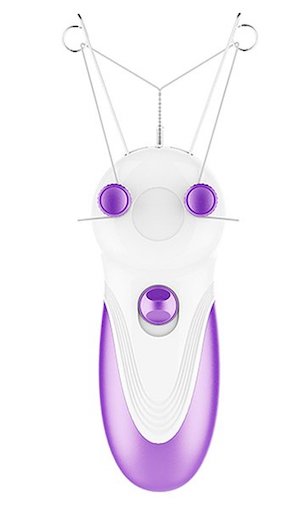
This purple electric threader is another cotton-thread option for facial hair removal. Its generic product name makes it especially important to match the seller listing to the pictured model rather than assume every similar device has the same features.
Check the approved areas before using it on your brows, arms, or legs. A broad threading head may be useful on a flatter facial area yet difficult to place accurately along a brow outline.
Use the thread type and installation method specified for the device. Thread thickness, tension, and routing matter; an incorrectly fitted loop may slip, snap, or fail to catch the hair.
The compact shape may be convenient to store, but handling matters more than size for eyebrow work. Before purchase, look for clear setup instructions and a view of the working head, not just photos of the handle.
A hairband is described with this kit; confirm what the seller includes. Keep loose hair away from the moving thread even when using a headband, especially around the temples.
This is worth comparing if you want an electric cotton-thread tool, but do not buy it on promises of painless results or permanently slower regrowth. Those claims do not tell you how well you will be able to control it.
3. Electric Hair Remover Cotton Thread Epilator

The Yunai cotton-thread epilator is described as a rechargeable facial hair remover. Confirm the model number and power specifications in the current listing, since similar-looking devices may have different features.
The thread catches hair rather than cutting it at the skin surface. If you are comparing options for fine hair removal, pay attention to thread setup and the size of the working area. Fine hairs can be difficult to see even when the tool can catch them.
Root removal can leave skin feeling smoother between sessions, but a fixed number of hair-free days is not guaranteed. Missed or broken hairs and individual regrowth affect how soon you need a touch-up.
For a rechargeable version, check the stated charging time, runtime, and whether it can operate while plugged in. Use its specified charging cable or adapter rather than assuming one from another beauty device will work.
A stronger motor does not guarantee that every hair comes out intact. If the tool repeatedly misses hairs, stop and check the threading instructions instead of making several passes over the same patch.
The LED feature described for this model may help illuminate the working area. Use a well-lit mirror too, and check the thread routing before switching the tool on.
Check that the switch is easy to reach with your normal grip. For brows, the ability to stop promptly and see the hairs you are removing matters more than claims about motor power.
4. Yunai Hair Remover Rechargeable Threader

This Yunai option is described as a compact rechargeable threader. It may suit someone who wants less cord clutter during facial hair removal, provided the supplied instructions cover the areas they intend to treat.
It is not automatically suitable for every skin type. Try only a small approved area first, and avoid using the thread over broken or already irritated skin.
The built-in light described for this version can help you see fine hairs and the thread path. It does not replace careful placement, particularly when you are close to your brow shape.
The small body is convenient for storage or travel. Keep the thread and attachments protected in a case, and check that a compatible charging supply is available at your destination.
Before comparing this with the other Yunai entry, check the actual model numbers. Similar names alone do not establish a different battery, head size, or set of approved treatment areas.
Choose it for the convenience of a rechargeable design only after confirming the specifications. Clear instructions, replacement cotton, and a usable working head are more useful than an unsupported promise of side-effect-free hair removal.
5. Slique Manually Threading Epilator

Slique is a manual cotton-thread tool, so there is no motor, charging cable, or battery to manage. Squeezing and releasing the handles moves the thread, giving you control over when it catches the hair.
It removes hair from the root without wax or depilatory cream. You still need to learn the motion and thread setup; manual operation does not make the process painless.
Slique provides self-threading guidance that includes eyebrows and other facial areas. Follow those instructions for placement and skin support, and keep the thread clear of lashes.
The compact design is handy for a travel bag, and it works without charging. Pack replacement thread too: the tool needs a correctly fitted cotton loop even though it needs no electricity.
This is the clearest manual-threading choice in this list for readers who want manufacturer guidance for brow use. The trade-off is a learning curve, so start conservatively rather than trying to reshape your whole brow in one session.
6. Ladybug Electric Hair Remover Epilator
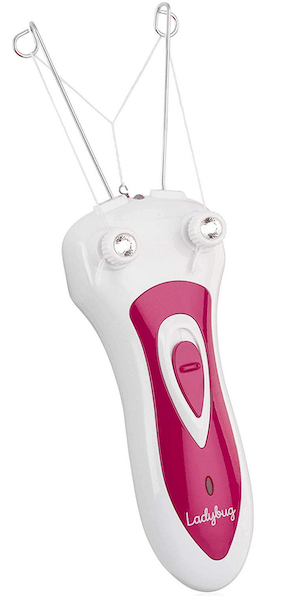
The Ladybug electric thread epilator is presented as a kit for home hair removal. Before ordering, check that the listing identifies the exact device and provides readable setup instructions.
The kit is described as including the epilator, cotton thread, an adapter, and instructions. Confirm the contents and approved treatment areas; having an adapter does not establish that a device is rechargeable.
Do not count on six weeks of smooth skin or a nearly pain-free session. Root removal can sting, and your results depend on how completely the hairs are removed and how quickly they regrow.
Check the label for whether this version is corded or rechargeable. If it has a battery, look for a stated runtime and charging method rather than assuming it will last through a full session.
A wide working head is a limitation for eyebrow shaping. Unless the manual expressly permits brow use and gives clear positioning instructions, choose it only for other approved areas of facial hair.
A bundled kit is convenient, but ongoing supplies matter too. Look for compatible replacement cotton and cleaning instructions before deciding whether this is a practical tool for your routine.
7. Kapmore Threader Facial Epilator

The Kapmore device described here is a manual spring facial hair remover, not a cotton-thread threading machine. It stays in this comparison as an alternative for facial hair, with an important limitation for eyebrow use.
Its spring catches hairs as it is rolled or moved according to the device instructions. There is no thread loop to install, and no motor to power.
Like threading, spring epilation pulls hair from the root rather than shaving it. It can still tug, sting, or catch skin, so avoid promises that it cannot cause irritation.
A reusable manual tool may reduce spending on some facial hair removal appointments, but it does not replace the skill needed to shape brows evenly.
Clean the spring and handles using the manufacturer’s instructions. A metal surface is not automatically sterile, and visible debris should not be left on a tool you use against your skin.
The compact design needs no batteries or charging. Follow the specified grip and movement; do not assume every spring remover uses the same one-handed technique.
Spring tools can catch fine hairs, but they are less suited to selecting one stray brow hair than tweezers. Check the model’s permitted areas rather than treating all facial hair removers as eyebrow tools.
Maintenance involves cleaning and checking the spring, even without charging or replacement cotton. Stop using it if the spring is damaged, catches skin, or no longer moves as intended.
For this comparison, consider Kapmore a facial hair removal alternative rather than a brow-shaping recommendation. Keep it away from eyebrows and eyes unless the exact model’s instructions explicitly permit that use.
What You Should Know About Eyebrow Threading
Before choosing a threading machine, it helps to separate what threading can do from what depends on your technique. Here are the practical points that matter for brow maintenance.
Threading comfort varies
Threading can feel like quick pinches or a repeated pulling sensation. Comfort varies with the area, your sensitivity, and the person or tool doing the work. It is reasonable to try a small approved area before committing to more.
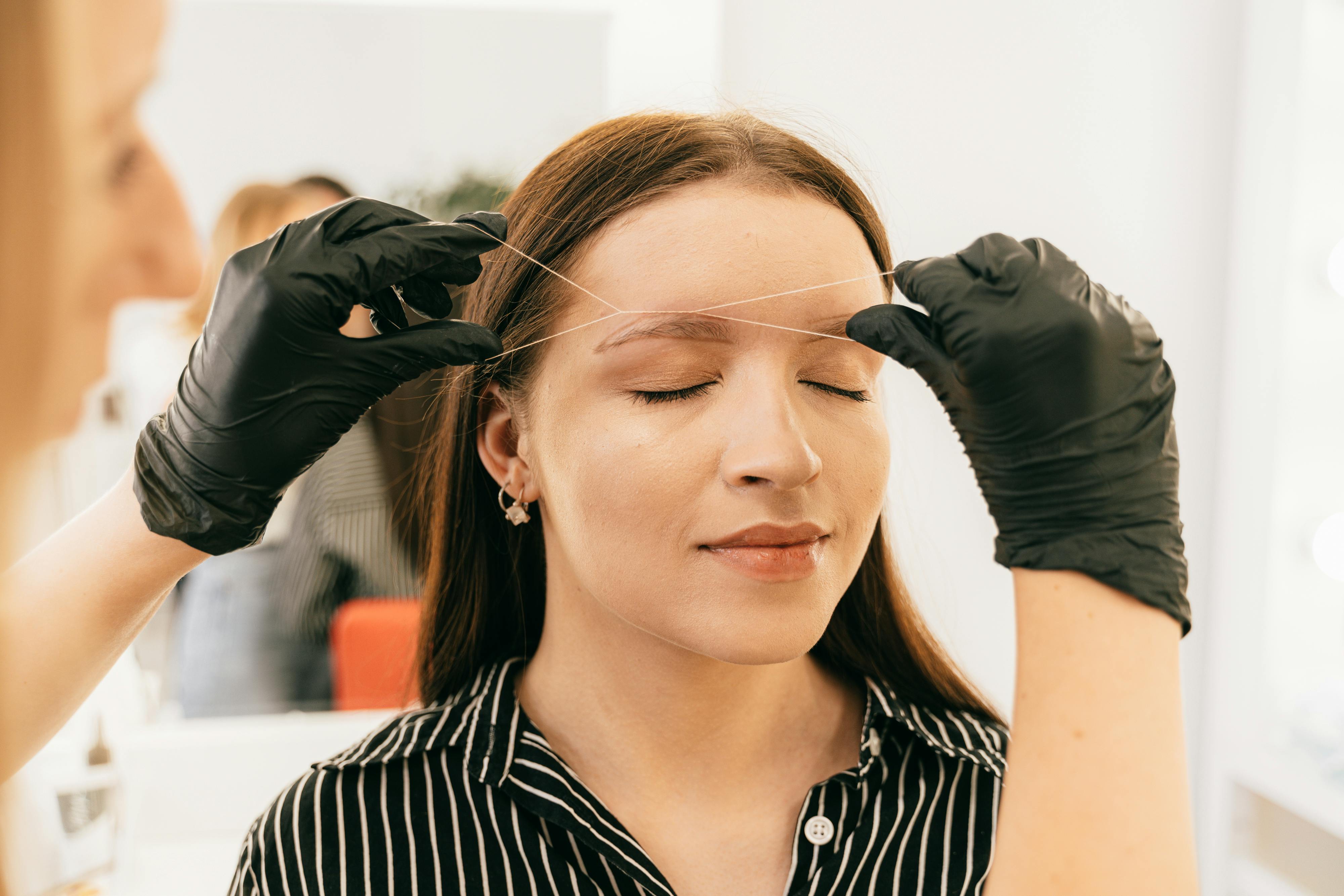
Waxing and threading can both be uncomfortable. Some people prefer one over the other, so do not choose a home tool solely because its description calls it painless.
Threading offers a precise finish
A skilled threader can create a defined brow edge by removing selected hairs. A home machine does not automatically offer that same precision: the contact area and your view of the brow both matter.
Keep the hairs inside your planned brow shape untouched. For a single stray hair close to the outline, tweezers may be easier to control than a moving thread head. Avoid chasing tiny hairs if you cannot see exactly where the thread will land.
Regrowth and touch-ups vary
Threading, waxing, and tweezing all remove hair from the root. Threading is not guaranteed to last longer than either of those methods, and no method catches every hair perfectly on every pass.
Check your brows between sessions rather than expecting every hair to reappear at once. Taking out a few strays is different from repeatedly thinning the outline, so be conservative with touch-ups.
Allow time to learn your tool
An experienced professional can work quickly, but allow extra time when learning a home tool. You need to fit the thread, arrange good lighting, and position the head carefully. Speed is not a useful goal while you are learning.
Threading can still irritate skin
Threading avoids applying wax or depilatory cream to the skin. That can be appealing, but the moving thread can still pinch or rub, and removing hairs can cause redness or irritation.
If you have sensitive skin, do not assume threading will suit you better than every other method. Avoid active breakouts or irritated patches, and ask a dermatologist for advice if hair removal regularly triggers a reaction.
Check the approved treatment areas
Traditional threading is generally used for small facial areas. A machine’s approved uses may differ, so follow its manual rather than the word “body” in a product title. Face approval alone does not establish that the tool is suitable beside your eyes.
Things To Remember When Threading
A little planning makes home brow maintenance easier. Read the instructions before starting and make sure you can distinguish the hairs you want to remove from the ones that define your shape.
Rely on the professionals
If this is your first brow shape, book an experienced threading professional. You can discuss the thickness and arch you want before any hairs are removed.
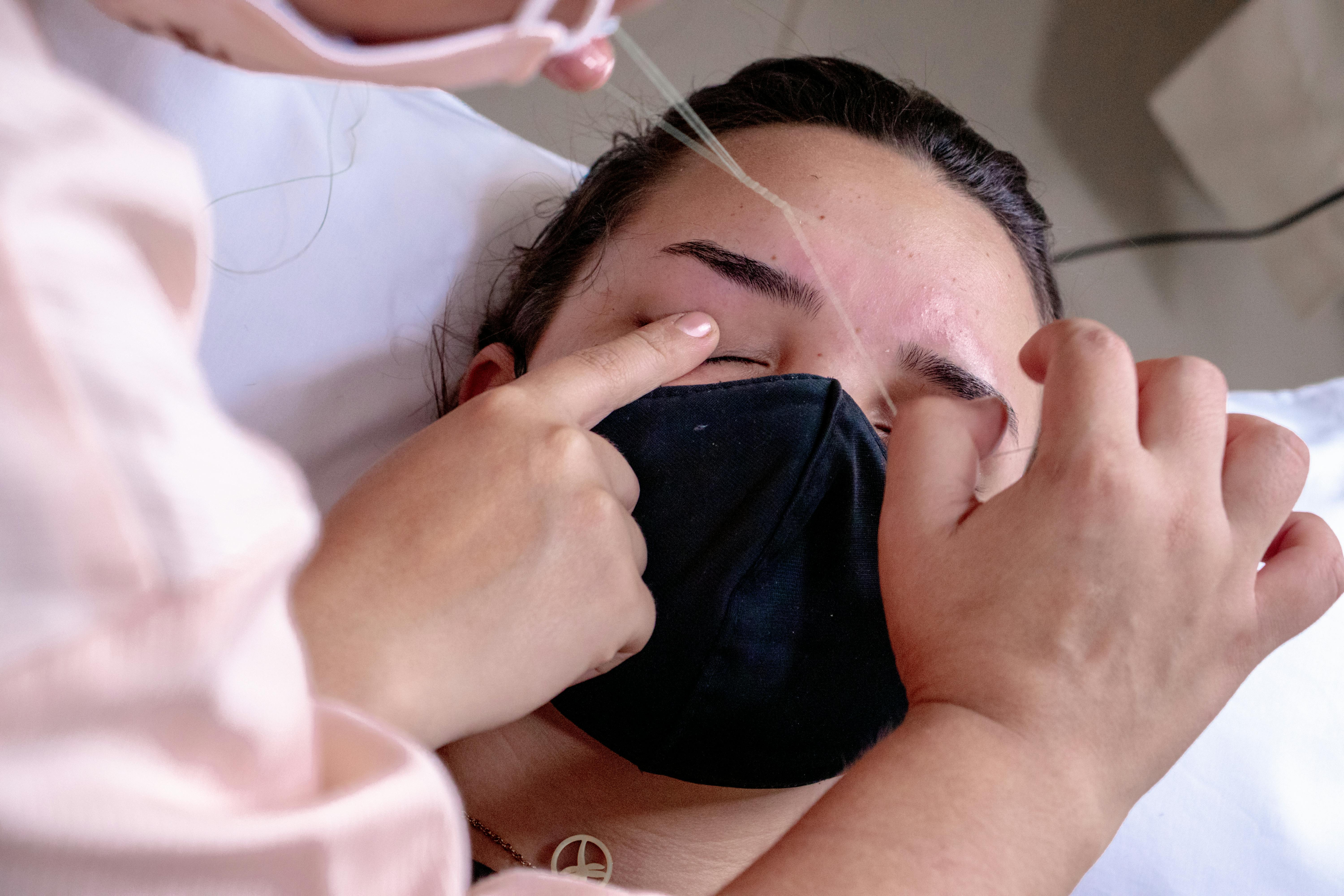
Ask how the technician maintains hygiene and how much hair they plan to take off. A good consultation helps you keep a shape that suits your face and leaves room for future changes.
Keep everything clean
Clean tools and fresh cotton matter whenever you remove hair. Do not share used thread or a device that has not been cleaned between users.
Wash and dry your hands before handling the cotton or touching your face. Gently cleanse the treatment area and remove makeup so you have a clear view of the hairs.
Use fresh thread as directed instead of trying to disinfect and reuse a worn loop. Clean reusable parts according to the manual, and keep electrical components dry unless the manufacturer specifically permits washing them.
Choose a time when your skin feels comfortable
There is no need for a blanket rule against threading during your period. If you know you feel more sensitive at certain times, choose a day when you feel comfortable and do not feel rushed.
For a first session, ask the technician to start with a small area. With a home device, try only an area its instructions permit and wait to see how your skin responds before continuing.
Know what you want
Decide on the shape before starting, and tell your technician how much thickness you want to keep. At home, a light brow-pencil outline can help you identify stray hairs outside that shape. Leave the arch alone if you are unsure.
Practice proper preparation and aftercare
Start with calm skin rather than threading immediately after an irritating treatment. If you use retinoids or recently had a peel, ask your clinician or threading professional about suitable timing; do not change prescribed treatment on your own.
The Cleveland Clinic guide to eyebrow threading covers discomfort, possible reactions, and aftercare. A gentle routine is more useful than trying to scrub your way to a cleaner finish.
Do not scrub or exfoliate immediately before threading. Friction can leave skin feeling more sensitive, so save exfoliation for when the area has settled.
Afterward, avoid rubbing the brows and give irritated skin a break from makeup, heat, and swimming. A cool compress can feel soothing. Seek medical advice if pain or redness worsens, or if you develop pus or spreading swelling.
Use a gentle, fragrance-free cleanser and avoid products that sting on the treated area. Keep your routine simple until your skin feels comfortable again.
Eyebrow Threading Machines Overview
An eyebrow threading tool can be useful for careful maintenance, but choosing the right type matters. Slique uses manual cotton threading, the electric entries move thread with a motor, and Kapmore is a spring remover.
For more on the method itself, the American Academy of Dermatology’s hair removal guide explains threading’s uses and limitations. A product label promising smooth skin is not evidence that its head is suitable for eyebrow shaping.
Before buying, confirm eyebrow approval, working-head size, replacement supplies, and power requirements. If you cannot verify those details, stick with a professional for shaping rather than experimenting near your eyes.
Frequently Asked Questions
Does eyebrow threading hurt?
It can. Expect a pulling sensation or quick stings rather than a guaranteed painless treatment. Try a small approved area first if you are unsure how comfortable it will feel.
How long does the pain last?
The pulling stops when threading stops, but tenderness or redness can linger afterward. If symptoms worsen instead of settling, stop hair removal and seek medical advice.
Is threading worse than waxing?
Neither method feels better for everyone. Threading uses cotton instead of wax, while both remove hair from the root. Your skin response and the skill of the person doing it matter.
How often will I need to redo it?
Many people book brow threading about every three to four weeks, though growth and the look you prefer affect timing. You may notice stray hairs sooner; removing hair does not make it all regrow together.
Can I use a threading machine on my arms or legs?
Only if the exact model’s instructions approve those areas. Traditional threading is best suited to smaller areas, and a facial device should not be assumed suitable for arms or legs.
Related Articles
Threading Back Hair – The Step-By-Step Guide
Threading Your Legs – The Complete Guide
The 7 Best Hair Removal Creams For Arms
You might also be interested in our guide on How To Thread Eyebrows With Floss – Step By Step.


