

The 5 Best Eyebrow Wax Kits For Sensitive Skin
Neatly shaped brows can finish a makeup look, but sensitive skin needs a careful approach to hair removal. The right product matters, and so does knowing when waxing is best avoided.
If brow waxing usually leaves you with burning, a rash, or lifted skin, switching brands may not solve the problem. Your skin-care routine, technique, and current skin condition all affect the risk.
A wax labelled for sensitive skin may be worth considering on calm, intact skin, but it cannot guarantee irritation-free results. Do not wax sunburned, broken, inflamed, or very sensitive skin. Tweezing a few stray hairs may be a more manageable alternative.
What should you look for in an eyebrow wax for sensitive skin?
Choose a product explicitly labelled for eyebrow use, with clear instructions and an ingredient list you can check against known sensitivities. No wax thickness or “hypoallergenic” claim guarantees safety. Heated wax also needs a temperature check, and retinoid use can make facial waxing unsuitable.
Below, we compare five options from the original selection, including an important warning about facial strips that are not approved by their manufacturer for brows.
The 5 Best Eyebrow Wax Kits for Sensitive Skin
Start with the format: peel-off wax needs heating, soft wax needs removal strips, and a pen may help with placement. Not every item below is a complete kit, so check which tools you need separately.
These comparisons cover convenience and limitations, rather than promising that every product suits sensitive skin. In particular, do not use the listed Nad’s facial strips on eyebrows unless the exact package expressly permits it.
1. Sally Hansen Eyebrow Wax Kit

Sally Hansen’s Microwavable Eyebrow, Face & Lip Wax Kit is an option for someone who wants a brow-specific product with several tools included. Its peel-off format avoids separate fabric removal strips.
The wax is heated in a microwave. Follow the heating instructions exactly, stir as directed, and check the temperature before it goes near your face. Microwave heating can produce uneven temperatures.
Once the wax has set according to the instructions, it is peeled away. Regrowth varies, so treat long-lasting smoothness claims as an upper limit rather than expecting every brow to stay tidy for eight weeks.
The brand’s kit description lists wax, a temperature-sensitive spatula, brow guides, mini tweezers, post-treatment lotion, and instructions. Check the contents of the package you buy.
Dermatologist-tested does not mean reaction-proof. Follow the package’s skin-test directions and keep the wax away from eyelids and the eye area. A temperature indicator does not replace careful handling.
The included lotion contains 5% benzocaine, a topical pain-and-itch reliever, rather than simply a nourishing moisturiser. Its Drug Facts label warns against use in or near eyes and use by anyone allergic to its ingredients. Follow those limits rather than automatically applying it around the brows.
Best fit: someone comfortable with heated, peel-off wax who wants brow guides and tweezers included. The main tradeoffs are temperature control and the need to check both the wax and aftercare ingredients.
2. GiGi Crème Hair Removal Soft Wax For Sensitive Skin
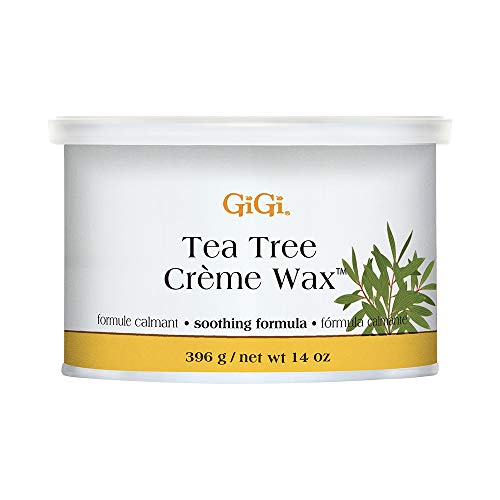
GiGi Crème Wax is a soft-wax option that needs a warmer, applicators, and removal strips. A lower melting point may make heating convenient, but it does not mean the wax cannot become hot enough to burn.
Check the exact variety before buying. The product image and linked listing here show Tea Tree Crème Wax, while GiGi also sells a separate Crème Wax formula marketed for sensitive skin.
GiGi’s standard Crème Wax ingredient list includes titanium dioxide, fragrance, and a rosinate resin. That does not establish that the finished wax treats inflammation or prevents reactions.
Apply soft wax only as directed and remove it with the appropriate strip. Any remaining residue needs the label’s recommended remover; do not repeatedly rub or wax the same spot to make it feel perfectly clean.
The Tea Tree version’s current brand page describes it for normal skin. Tea tree in the name is not proof that it is the gentlest choice for reactive brows.
Best fit: an experienced user with the required soft-wax tools who has checked the exact formula. It is less convenient than an all-in-one brow kit and may not suit someone sensitive to fragrance or resins.
Check warmth before application and stop if skin burns or lifts. Neither a low melting point nor a creamy texture guarantees a painless session.
3. Nad’s Hypoallergenic Facial Wax Strips

Important: facial wax strips are not automatically eyebrow wax strips. Nad’s current Facial Wax Strips precautions specifically say they are not suitable for eyebrows. Do not assume the older hypoallergenic packaging shown here permits brow use.
Keep these strips for areas explicitly allowed on your own package. Cutting a facial strip into a smaller shape does not override a warning against eyebrow use.
For permitted areas, follow the pack’s preparation and removal instructions. Check the wax and the supplied wipe with the recommended small-area test before each use.
“Hypoallergenic” and “fragrance-free” describe particular product claims, not permission to use a strip anywhere on the face. Check the current formula and permitted treatment areas.
Flexible paper can help a strip follow facial contours, but that feature does not make it appropriate for delicate eyelid skin or precision brow shaping.
Moisturising ingredients such as shea butter do not eliminate the pulling force of waxing. Results and skin reactions vary, even with sensitive-skin products.
Wax removal can hurt and cause temporary redness. If you have previously reacted badly to a wax or wipe, do not keep testing it around your eyebrows.
Verdict for brows: do not choose the facial-strip pack shown here for eyebrow shaping when its instructions exclude that area. Nad’s also makes separate Sensitive Eyebrow Wax Strips; these are a different product with their own precautions.
4. Wokaar Hard Wax Beads For Sensitive Skin

Wokaar hard wax beads offer a peel-off format once the heated wax has cooled and set. Check the exact bag for ingredients and approved facial areas rather than relying on a coconut-oil claim.
A successful pass may remove several hairs at once, but missed hairs and discomfort are still possible. Use tweezers for a few leftovers instead of repeatedly waxing the same sensitive spot.
Hard wax usually does not require a fabric strip. Its performance still depends on temperature, layer thickness, and setting time; do not assume it only grips hair and can never pull skin.
Confirm eyebrow use on your specific package. Wokaar markets some hard-wax kits for facial areas, but “natural” ingredients do not establish that any individual formula is safe for your sensitivities.
You will need compatible heating equipment and small applicators for precision. A digital warmer display is useful for control, but it does not tell you how the wax feels on your skin.
Outline the hairs you intend to remove before starting, then work in small sections with the permitted brow product. Avoid covering hairs you want to keep; wax is less forgiving than removing one hair at a time.
Best fit: someone already confident with hard wax and a warmer. Beginners who find small brow areas difficult may prefer careful tweezing or an experienced professional rather than learning with heated beads near the eyes.
5. Wax Up Twist & Go Eyebrow Wax Pen
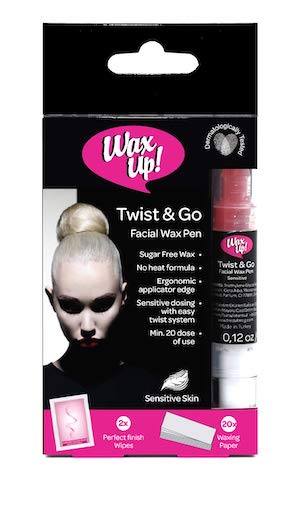
The Wax Up Twist & Go pen is a compact format intended to make small-area placement easier. Check the exact version’s instructions before assuming it can be used around the brows.
An applicator’s shape tells you little about ingredient tolerance. Read the full current label, including any wax resins, fragrance, and supplied aftercare products.
If your version is labelled as a no-heat product, that avoids a heating step. It does not remove the risk of irritation or skin lifting when the wax is pulled away.
Do not judge value by a promised number of applications alone. The amount used, area treated, and included removal supplies all affect how far a pen lasts.
Sensitive-skin labelling is not a guarantee of comfort. Complete the package’s skin test and check its restrictions on medications and irritated skin before application.
Check whether the pen needs removal strips and whether these are included. A twist applicator dispenses wax; it does not necessarily replace every other tool.
Use a good mirror and steady lighting to plan placement. Avoid waxing while travelling or in a hurry, even if the pen is small enough to carry in a makeup bag.
Best fit: someone who wants precise dispensing and has verified that the exact pen is labelled for brows. Choose a product with clear current instructions rather than relying on older ingredient or application claims.
Tips For Waxing Eyebrows With Sensitive Skin
Before waxing, check your skin and medication routine. The AAD advises no waxing during isotretinoin treatment or for six months afterwards. If you use retinol, tretinoin, antibiotics, or have had a peel or resurfacing treatment, ask your clinician about suitable hair removal instead of changing medication yourself.
Check The Label And Your Skin-Care Routine
Price is not a reliable measure of gentleness. Look for clear eyebrow-use instructions, complete ingredients, and a format you can control.
The AAD’s at-home waxing guidance recommends avoiding facial retinoids before waxing and never waxing very sensitive or sunburned skin. Ask your prescriber how this applies to your routine; a salon-grade label does not cancel those precautions.
Prepare and remove carefully: gently cleanse and dry skin, test warmed wax on your inner wrist, and follow the kit’s directions. Hold skin taut and remove wax close to the skin rather than pulling upwards. Keep products off eyelids, and avoid a second pass on the same patch.
Keep Aftercare Gentle
Keep aftercare simple. A cool compress and a small amount of a familiar, fragrance-free moisturiser can be more comfortable than adding several new products.
Skip lavender or tea tree essential oil on freshly waxed brows. Fragrance and even natural skin-care products can cause reactions, as the AAD’s contact dermatitis guide explains.
If residue remains, follow the wax’s removal instructions and keep remover away from eyes. Do not scrub, use hot water, or pick at stuck wax until skin becomes sore.
Give Your Skin Extra Love
For the first 24 hours, follow the kit’s aftercare restrictions and keep the area comfortable. Avoid touching or rubbing freshly waxed skin, and postpone another session if redness remains.
Leave makeup and fragranced products off the treated area while it is irritated. Avoid hot showers and other heat that makes the skin sting.
Use shade and a hat outdoors, and a sunscreen you tolerate on intact skin. The AAD recommends broad-spectrum, water-resistant SPF 30 or higher. Do not apply products that sting to raw or lifted skin.
Wait Before Exfoliating
Exfoliation is optional, not a required step after brow waxing. Wait until skin is fully calm before returning to exfoliants, and follow your usual skin-care or clinician guidance.
Scrubbing tender skin can add irritation. Do not exfoliate cuts, lifted skin, or a sunburn; if you are prone to bumps, ask a dermatologist about a gentler routine.
Our guide to homemade sugar face scrubs covers general exfoliation, but a gritty scrub is a poor choice for freshly waxed sensitive brows. The AAD’s exfoliation advice explains why sensitive skin may find mechanical scrubs irritating.
Eyebrow Waxes For Sensitive Skin
The most useful eyebrow wax is one you can place accurately, remove correctly, and tolerate. A sensitive-skin claim does not make every product above an appropriate brow choice.
Check the exact label, complete its skin test, and avoid waxing irritated skin. If redness or swelling lasts more than two days, the AAD recommends seeing a dermatologist; seek advice sooner for burns, skin lifting, or a severe reaction.
For just a few stray hairs, careful tweezing may be all you need. Choose the method your skin handles best, and aim for tidy brows without repeated passes or unnecessary irritation.
Related Articles
The 5 Best Oils To Use After Waxing


