

Can You Tan Through Glass?

How amazing would it be if we could tan through the glass while sitting at our desk next to the window at work?
Or tan sitting on a comfortable chair near a window on a sunny day, enjoying the cool air conditioning inside?
It would be really great to enjoy the best of both worlds – staying cool inside and avoiding the sweltering heat, but still being able to catch a bronze summer tan.
Being stuck inside when it is sunny outside can be a downer, but could you actually tan sitting next to a window?
Unfortunately, it’s not worth your time trying to catch a tan through a window.
While you can technically tan through a standard glass, the type used in windows, it would take quite a substantial amount of time for the tan to develop, and you could be sitting there for ages.
Why Tanning Through Glass Isn’t Ideal
Standard glass, such as that used in homes and offices, absorbs approximately 97% of UVB rays from the sun.
UVB rays are responsible for tanning and skin damage, and are often the cause of skin cancer in many cases. On the other hand, the glass will only absorb around 37% of UVA rays, which can also help protect the skin from tanning.
UVB rays trigger melanin production in the skin, resulting in the darkening of the skin. UVB rays penetrate deeply into the skin, which is why they can cause such lasting damage.
UVA rays have a longer wavelength than UVB rays, which is why they can penetrate glass more. These rays damage the collagen in the skin and can lead to premature skin aging.
Sitting next to a window that prevents this amount of UV rays from reaching through would be equivalent to wearing an SPF 30 sunscreen outdoors.
While you may be able to tan, it will take a considerable amount of time before you notice a noticeable difference.
Tanning In The Car

Windshields and windows on cars offer more protection from the sun than ordinary glass.
Most car windscreens have a plastic layer between two layers of glass, which blocks out all UVB rays and around 80% of UVA rays.
Due to this, it is pretty impossible to get any sort of tan while driving around.
While it would be convenient to catch a tan on the way to the shops, it is ultimately for the best. Imagine being at risk of being sunburned every time you drove around on a sunny day?
You would have to be constantly slathered in sunscreen to protect your skin from just driving around alone.
Can I Get Enough Vitamin D Through Glass?
Sunlight is actually beneficial for your skin when you are exposed to it for moderate amounts of time. In contact with sunlight, our body produces vitamin D.
Vitamin D is essential for helping the body absorb calcium and promoting bone growth. Too little vitamin D in the body can lead to fragile and misshapen bones.
Additionally, vitamin D plays a crucial role in numerous other bodily functions.
Ordinary windows block a significant portion of UVB rays, which are essential for the body to produce vitamin D.
This means that the amount of these rays absorbed and used to create vitamin D is also limited when sitting next to a window.
You will still need to spend some time in the actual sun to allow for the correct amount of vitamin D to be produced.
Wearing Sunscreen Indoors
The damage the sun can cause to the skin should never be underestimated.
From severe sunburn to skin cancer, there are numerous negative consequences of overexposure to the sun, which is why it is crucial to protect your skin whenever possible, even when you think it might be safe from the sun.
Glass blocks most of the UVB rays but allows some UVA rays to pass through. UVA rays can cause damage to your skin, even if you cannot notice the damage happening immediately.
Because of this, it is still important to protect your skin when sitting indoors near a window, as your skin will be exposed to UVA rays.
You may not be aware, but damage can build up over time from exposure to UVA rays through windows, which can lead to premature skin aging, sunspots, and, in severe cases, skin cancer.
You don’t need to wear an SPF50 sunscreen if you know you will be sitting indoors all day, but you could instead choose to wear a moisturizer or foundation with built-in SPF protection.
This should be enough to protect your skin while sitting indoors and is a great way to give your skin some extra hydration and nourishment as well.
Alternative Ways To Tan
So, tanning through a window can happen, but time-wise, it is not the best way to achieve a golden glow.
You will have to sit next to a window for ages, and you probably won’t notice the effect as it will happen so slowly over an extended period of time.
Instead, consider one of the following options for tanning.
Tanning bed

Tanning beds are really convenient, and it should not be difficult to find a tanning salon near you.
Visiting a tanning bed twice a week can help you build and maintain a healthy-looking tan without spending time outdoors.
Just be sure to limit your time in a tanning bed to avoid burning your skin, and use a tanning bed lotion to provide your skin with sufficient hydration and nourishment, keeping it healthy and preventing it from drying out.
Tanning bed lotions also help to maintain a tan for a longer period.
Tanning outdoors
Tanning outdoors is the most traditional method around. For decades, people have been heading outdoors and spending hours lounging in the sun to achieve a gorgeous summer glow.
While this is an effective and natural way to tan, it is crucial to exercise extreme caution when doing so.
Overexposure to the sun can do more harm than good, so it’s essential to apply a light SPF protection to your skin when tanning outdoors and allow it a few days to rest before heading back outside.
Self-tanners
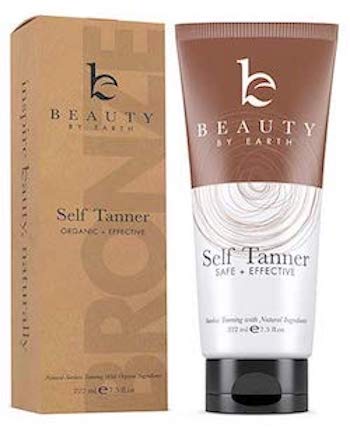
Self-tanners are growing in popularity due to their effectiveness and formula, which doesn’t require any sunlight. It is possibly the safest way to tan, without any sun damage to the skin.
You may already be familiar with our favorite self-tanner, Beauty by Earth. We talk about it all the time, only because we love it so much.
However, self-tanners can be hard to master, but with the right product and the correct technique, they can offer a flawless bronze tan from the comfort of your own home.
Self-tanners do not last as long as natural tans, but they can be easily reapplied and maintained at home.
Spray tans
If the idea of applying self-tanner to your own body at home sounds a bit daunting, there is the option of spray tanning.
Spray tans are offered at tanning salons, where professionals apply a formula evenly to your body to darken the skin.
Tanning at a salon ensures a streak- and patch-free tan from head to toe, and helps tan all those hard-to-reach places that are often missed with self-tanners at home.
Related Questions
Can you tan in the shade?
It might not seem possible, as you are actually out of direct sunlight, but you can tan in the shade.
Your skin does not need to be exposed to direct sunlight to tan, but secondary radiations bouncing off the environment around you can also cause tanning.
UV reflection from sand, snow, and water can all reach and darken the skin, so it is important to wear protection even if you are spending your day in the shade.
Are there UV rays at night?
There are some UV rays at nighttime, but in very low quantities. There are not nearly enough hours of sunlight to tan your skin, even if you spend the whole night outdoors.
Can I tan in the evening?
Tanning in the evening is actually recommended.
You won’t tan as fast as you will during peak sunlight hours during the day, but you also won’t be exposing your skin to as much damage from UV rays as during the day, either.
There are still enough UV rays in the evening to slowly tan the skin, but without the risks of sunburn that usually come with tanning outdoors.
Tanning Through Glass
It is completely possible to tan through the glass if you are prepared to spend countless hours sitting next to a window.
Even if you do happen to do this, you probably won’t notice the darkening of the skin because it will be so slow and gradual.
To be safe, wear sunscreen when sitting indoors next to a window.
This way, you can enjoy the sunlight through the glass, the cool air conditioning inside, and still protect your skin from sun damage.
Related Articles
Can You Tan Through Water? Everything You Need To Know
You might also be interested in our guide on Can Pale People Tan?.
You might also be interested in our guide on What UV Index Is Good For Tanning?.


