

5 Best Self-Tanners To Cover Vitiligo
If you want to make vitiligo patches less noticeable, self-tanner is one cosmetic option to consider. You can also leave your skin as it is; coverage is a personal choice, not something you owe anyone.
A DHA self-tanner can add temporary color to skin that has lost pigment, without needing sun exposure. The challenge is matching the surrounding skin, which takes a small-area color test and careful application rather than simply choosing the darkest shade.
This guide compares five self-tanners and camouflage products, explains their limitations, and offers practical tips for blending patch edges. These products change the appearance of skin temporarily; they do not treat vitiligo or restore pigment.
What is Vitiligo?
Vitiligo is a condition in which areas of skin lose pigment, creating lighter or white patches. The contrast with surrounding skin varies with your natural skin tone and where the patches appear.
Some people have a few small patches, while others have larger or more widespread areas. The amount of skin involved does not determine whether you should use camouflage.
Vitiligo is not contagious. If you notice new areas of pigment loss, see a dermatologist for a diagnosis rather than assuming every lighter patch is vitiligo.

People feel differently about their vitiligo, and those feelings can change. If you would like camouflage, that is a valid choice; if you prefer not to cover it, that is equally valid.
The American Academy of Dermatology lists self-tanner, skin dyes, and camouflage makeup as options for evening the appearance of skin tone. A dermatologist can help you choose a product and shade.
A self-tanner may reduce contrast, but it can also darken surrounding pigmented skin. An all-over application is not guaranteed to make the two areas match, so compare a small test patch with nearby untreated skin first.
For targeted coverage, a gel or lotion you can place precisely may be easier than a full-body mousse. For widespread patches, a mousse can cover a larger area quickly, although shade matching still takes practice.
Think about the result you want: a subtle reduction in contrast, closer camouflage of a small patch, or an overall bronzed look. These goals may call for different products and application methods.
Sun tanning is not a useful way to blend vitiligo. Surrounding pigmented skin can darken while depigmented patches remain light, increasing the contrast.
Skin that has lost pigment can burn easily. Use broad-spectrum, water-resistant SPF 30 or higher, along with shade and protective clothing. Intentional sun tanning and tanning beds are not substitutes for prescribed phototherapy.
Is Self-Tanner Safe to Use If You Have Vitiligo?
Most self-tanners use dihydroxyacetone, or DHA, which reacts with amino acids in the skin’s outer surface layer to produce temporary color. The FDA explains how DHA and cosmetic bronzers work.
DHA does not need melanin to develop color, so it can work on depigmented skin. However, that does not mean it will reproduce the exact shade or undertone of your surrounding skin.
Self-tanner can be an option for people with vitiligo, but no formula is guaranteed reaction-free. Use it on intact skin, check ingredients you know you react to, and ask your dermatologist about use alongside prescribed creams or light treatment.
Natural and organic ingredients are not automatically gentler. Fragrance, botanical extracts, and other ingredients can cause irritation in some people, so familiar ingredients and a fragrance-free option may be more useful than an organic claim.
Moisturizing ingredients can help dry skin feel softer. They do not make the product a sunscreen or prevent a reaction, and the color from a self-tanner does not replace sun protection.
Avoid applying a new tanner over an active rash, broken skin, or an irritated patch. If you experience burning, itching, or swelling, wash the product off and stop using it.
Do a small-area skin tolerance test before wider use, following the product directions. The AAD recommends testing new skin care products twice daily for seven to 10 days; follow the self-tanner’s labeled use rather than exceeding it just for a test.
A home test is not a medical allergy test, and one reaction-free application cannot guarantee future tolerance. If you have recurring reactions or a known skin allergy, ask a dermatologist for guidance.
Once you know your skin tolerates the formula, test its color on a discreet area that includes a patch edge. Let it fully develop, assess it in daylight, and compare it with your surrounding skin before adding another layer.
Below are five options with different textures and development schedules. The most useful choice depends on whether you want targeted camouflage, gradual color, or an express mousse.
Top 5 Self-Tanners For Vitiligo
For a small patch, control over placement often matters more than speed. For larger areas, consider how easily you can spread the product and blend its edges without repeatedly going over the same spot.
A guide color is the temporary tint you see while applying some self-tanners. It can help show where you have placed the product, but it is not necessarily the final shade after the DHA develops and the tint rinses away.
These comparisons use product information rather than documented testing on vitiligo. None of the five is guaranteed to conceal every patch. When choosing, consider:
- Price and amount needed per application
- Formula and fragrance
- Shade and development time
- Control over placement
- Coverage limits and maintenance
Also check whether the bottle is intended for the face or body, and whether it contains fragrance. A familiar brand name does not establish that every product in its range will suit you.
The descriptions below explain where each format may be useful and where it may fall short.
For targeted camouflage, Viticolor is specifically designed for depigmented areas. Jergens offers a gradual approach, while MineTan and St. Tropez provide mousse formats. SunLabs is a tinted lotion. Use that distinction to narrow your choices before comparing shades.
1. MineTan Color Correcting Self Tan Foam

The pictured MineTan Olive Self Tan Foam is a green-base express mousse intended to give an olive-bronze finish. “Color correcting” refers to the tan’s undertone, not a proven ability to match vitiligo patches automatically.
Its guide color can help you see where the foam has been applied. For a small depigmented patch, though, a mousse may be less precise to place than a brush-applied gel.
The main practical benefit is its express rinse schedule. It may suit someone who wants a shorter period wearing guide color, provided the olive undertone works with their surrounding skin.
The manufacturer describes rinsing after one hour for a lighter result, or leaving it longer for deeper color. Rinsing is not the end of color development: MineTan says the shade continues to deepen afterward. Follow the current bottle directions and wait before deciding whether to reapply.
The published formula includes DHA, vitamin E, and several oils, including avocado and coconut. Check the bottle for your known triggers, and avoid choosing it simply because the brand describes it as suitable for all skin types.
2. St. Tropez Self Tan Bronzing Mousse
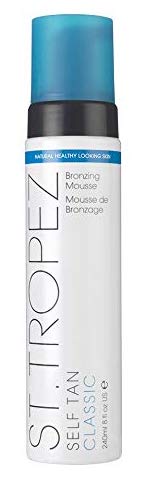
St. Tropez Self Tan Bronzing Mousse is a tinted mousse for sunless body color. Its visible guide tint may help with an even application over larger areas.
Confirm whether you have Classic or Express before following a rinse schedule; they are different products. Use the instructions on your exact bottle instead of borrowing a one-hour routine from another St. Tropez mousse.
It may suit broader coverage better than tiny touch-ups. A darker all-over application can deepen the surrounding skin too, so start with a small color test rather than expecting the guide tint to show your final match.
The published Classic formula includes fragrance. Claims about an even fade or a reduced self-tan smell do not guarantee that your skin will tolerate it or that every patch will blend seamlessly.
This mousse supplies cosmetic color, not treatment for vitiligo or dependable sun protection. Check out my full review here
3. Viticolor Skin Camouflage Gel

Viticolor Skin Camouflage Gel is specifically designed to add cosmetic color to depigmented areas. It is the most targeted camouflage format in this comparison, rather than a general full-body bronzing mousse.
Its formula combines DHA, erythrulose, and colorants. The visible tint helps with placement, while the self-tanning ingredients develop color over time. It does not freeze, restore, or permanently change pigmentation.
ACM’s Viticolor instructions describe starting in the center of the patch with a flat brush and blending outward. Let it dry, then reassess after eight hours before repeating if the shade is too light.
The manufacturer advises asking your doctor before using it during UVB phototherapy. Do not assume a camouflage product can remain on during a treatment session; follow your treatment team’s instructions. Viticolor does not replace sunscreen.
ACM suggests one or two applications per week to maintain color once established. Your match and maintenance needs may differ. The ingredient list includes denatured alcohol, so test for comfort as well as shade.
4. Jergens Natural Glow Daily Moisturizer

Jergens Natural Glow Daily Moisturizer combines body moisturization with gradual sunless color. It may suit someone who prefers small changes over several days rather than a stronger result after one application.
Build color only at the frequency specified on the bottle. If using it to touch up a lighter patch, assess the fully developed shade before adding more and blend carefully at the edge.
The brand highlights vitamin E and moisturizing ingredients. Those may help dry skin feel softer, but they do not guarantee coverage or treat the pigment loss.
The product is scented, so it is not an obvious choice if fragrance irritates your skin. Check the current version’s ingredient list before buying.
It applies much like a body lotion: spread a thin, even layer, wash your hands, and let it dry before dressing. Its slower color change can make adjustments easier, though repeated application also takes more maintenance.
Choose a shade based on your surrounding natural skin tone, not solely on the white patch. The brand offers different shade ranges, and the body moisturizer should not be assumed suitable for facial use.
5. SunLabs Self-Tanning Lotion

SunLabs Self-Tanning Lotion is a tinted lotion option for readers who prefer a lotion to foam. Check the exact shade and version in the listing, since the range includes darker formulas.
A visible tint can help show placement, but its immediate color is not a guarantee of the developed shade. A dark formula may be difficult to match to lighter surrounding skin.
The manufacturer’s published formula includes DHA, glycerin, botanical extracts, fragrance, and colorants. Natural ingredients and paraben-free marketing do not guarantee a reaction-free application.
For targeted use, work on a small area and blend the border carefully. Even coverage depends on technique; no lotion makes application error-free.
This format may appeal if you like seeing a guide color while you apply. It is less useful if you need a very subtle shade or avoid scented botanical formulas. Let it develop according to the bottle before judging the match.
Tips for Applying Self Tanner on Vitiligo
There is no fixed four-day self-tanning schedule for vitiligo. The right routine depends on the product, its developed shade, how it fades, and how much contrast you want to reduce.
Start conservatively on the lighter area and feather the product at its border. Use a suitable small applicator for precision, and avoid repeatedly coating the surrounding skin if that makes it darker than your intended match.
Wait until the product has fully developed before adding more. Check in daylight, and follow the labeled interval for reapplication rather than automatically applying a full-body coat on the third day.
Do not scrub the color off on a fixed schedule. The AAD advises avoiding cuts, scrapes, and burns, because skin injury can trigger new patches in some people. Let color fade and keep cleansing gentle.
A gradual lotion can offer more control over small shade changes, but daily layering is not automatically best for everyone. Pause if the color overshoots your match or your skin becomes irritated.
For a first application, keep preparation simple:
- Cleanse gently – Start with clean, dry, intact skin. Avoid vigorous exfoliation or trying to remove every bit of old color. Ask your dermatologist before exfoliating if your vitiligo is active or your skin is easily injured.
- Plan hair removal separately – Shaving is not required for self-tanner to work. If you choose to shave, let any irritation settle before applying and avoid nicks or cuts.
- Moisturize and apply carefully – Follow the product’s preparation directions, using a light moisturizer on dry areas if advised. Blend sparingly, wash your hands, and let the tanner dry before dressing. Keep DHA products away from eyes, lips, and mucous membranes.
You do not need a perfect match for camouflage to be useful. A slight reduction in contrast may be enough, and camouflage makeup can offer a more adjustable option if self-tanner’s undertone does not suit you.
Choose the format you can apply comfortably, test the shade, and protect your skin from the sun. If you are receiving treatment, ask your dermatologist how to fit cosmetic coverage into that routine.
Related Articles
5 Best Self-Tanners For Covering Stretch Marks
5 Best Self-Tanners For Your Feet


