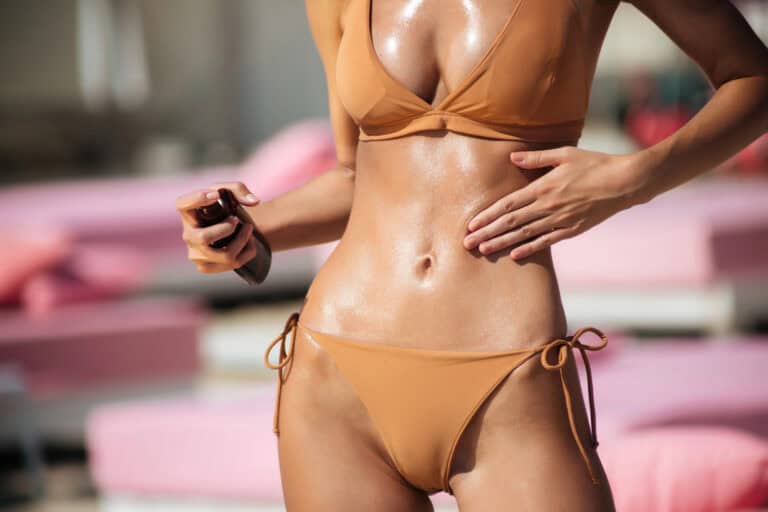
How To Get A Golden Tan (Not Brown)
If you want a golden tan without a deep brown finish, focus on the shade and depth of cosmetic color. A light self-tanner or warm-toned body bronzer gives you more control than trying to manage the color of a suntan.
“Golden” usually describes a warm, softly bronzed appearance, rather than a separate type of tan. The result depends on your starting skin tone, the product, and how much color you build.
But how do you get a golden tan without turning dark brown?
For a subtle golden tan, start with a light or gradual self-tanner, test the developed shade, and wait before adding another layer. Use gentle preparation and follow the formula’s instructions. A warm-toned wash-off bronzer can add glow without lasting color. Sun exposure, sunscreen, and tanning beds cannot reliably produce a chosen undertone, and UV tanning damages skin.

Here is how to choose and apply color without making it deeper than you want, plus what sunscreen, hydration, and tanning lotions can actually do.
How To Get A Golden Tan With Self-Tanner
Self-tanner can create a bronzed appearance without UV exposure. Most formulas use DHA, which reacts at the skin’s surface, as explained by the FDA’s guide to sunless tanners.
An expensive formula can still be a poor shade match. If the result looks too orange, dark, or dull on you, consider both its undertone and the amount of color you are building.
Aim for a modest change from your starting shade. “Golden,” “olive,” and “medium” are brand descriptions, so a small test is more useful than assuming the same label looks identical on everyone.
Choose The Right Self-Tanner
The Dripping Gold self-tanner from Suzanne Jackson is one option to compare. The brand describes its Medium Luxury Mousse as golden-olive, while Dark gives a deeper golden finish. Check the shade selected in the listing: the range name alone does not tell you how dark it will look.
Mousses spread easily with a mitt, lotions can suit those who prefer a cream texture, and gradual formulas let you build color in smaller steps. Format does not guarantee a particular undertone.
A light gradual tanner is a practical starting point if you are worried about going too dark. Follow its application schedule and stop layering once the developed shade suits you.
Test on a small, hidden area and judge the result after full development and any instructed rinse, in daylight. A tinted guide color can look different from the final tan. Follow the label’s allergy-test directions too.
Exfoliate Your Skin
If your skin tolerates it, gently exfoliate before application to smooth rough patches. Preparing the day before gives you time to notice irritation. Avoid exfoliating sunburned, broken, or already irritated skin.
Knees, elbows, ankles, and other rough areas can develop more noticeable color. Use less product there rather than trying to scrub them perfectly smooth.
Apply to dry skin in sections, blend around wrists and ankles, and use a mitt or wash your hands afterward. These AAD application tips help with even coverage; exfoliation does not turn a dark formula into a golden one.
Moisturize
Keep dry skin comfortable with regular moisturizer, but check the tanner’s preparation instructions. Some formulas call for skin free from moisturizer at application. A heavy all-over layer can interfere with coverage.
For dry joints, follow the product’s advice on using a small amount of moisturizer or less tanner. After development and rinsing, moisturizing can soften the appearance of dryness. It cannot change the formula’s undertone.
Mix With Moisturizer Only As Directed
Tanning drops designed to mix with moisturizer can be useful when you want adjustable color. Use the number of drops and the type of base specified by the manufacturer, and mix thoroughly.
Do not assume every mousse or tanning lotion can be diluted successfully. For a ready-to-use formula, choose a lighter shade or a gradual product unless its label specifically allows mixing. Never mix self-tanner into sunscreen.
Do Not Overdo It
Build color cautiously. Applying extra layers before the first one has developed makes the final depth harder to judge, especially around dry areas.
Use your product’s full development time rather than a universal two-day rule. For example, Dripping Gold’s current Luxury Mousse directions specify at least eight hours before rinsing; other formulas differ. An express rinse time is not necessarily the point when final color is visible.
How To Get A Golden Tan In The Sun
You cannot choose a golden undertone by adjusting sun exposure. Your natural pigment response determines how a UV tan looks. For a specific finish, use cosmetic color and protect your skin outdoors.
Use Sunscreen

Use sun protection whenever you are outdoors, whether or not you have applied self-tanner. A cosmetic tan does not replace sunscreen.
Choose broad-spectrum, water-resistant SPF 30 or higher, and combine it with shade and protective clothing. Reapply every two hours outdoors and after swimming or sweating.
The linked SPF 15 is below the AAD’s SPF 30 recommendation; the linked SPF 30 meets that SPF threshold. Check for broad-spectrum protection and water resistance on the current label. Do not lower SPF to chase a particular tan color.
SPF measures sunburn protection, not whether your tan will look golden or brown. Sunscreen reduces UV exposure but does not make intentional sun tanning safe.
Do Not Use A Timed Tanning Schedule
A short tanning session is not a reliable way to create a subtle shade. UV intensity varies with location, season, time of day, and other conditions.
Skin tone affects how you respond, but darker skin can still burn and sustain UV damage. The shade you see is not a measure of how much damage has occurred.
The FDA explains that UV tanning is a sign of skin damage. Color can continue changing after exposure, so judging when to stop by the immediate shade is unreliable.
There is no universal “15 minutes every few days” routine that guarantees a golden tan without damage. If you want a gradual change, build it with a gradual sunless formula instead.
Stay Hydrated
Drink enough water for your normal needs and use moisturizer if your skin is dry. Hydration does not prevent sunburn, stop peeling after a burn, or determine whether a tan looks golden. Sore or peeling skin needs gentle care before cosmetic tanning.
Use Bronzer
For a golden finish today, try a wash-off body bronzer or a touch of warm-toned shimmer over your usual skin tone or developed self-tan. It adds an adjustable cosmetic effect without another layer of lasting color.
Test a small amount in daylight. A light gold or champagne sheen may suit a subtle finish; a much darker bronzer can make the result look deeper. Let it set as directed and check for transfer before dressing.
How To Get A Golden Tan In A Tanning Bed
A tanning bed uses UV radiation, and its color result is not reliably more golden than a suntan. It also carries risks that a lotion or a spaced-out schedule cannot remove.
The AAD advises that there is no safe tanning bed. The following points explain why common salon tips do not offer dependable shade control or protection.

Understand What Tanning Lotion Can Do
Some tanning-bed lotions moisturize skin or contain cosmetic bronzers. Those effects should not be confused with protection from the bed’s UV radiation.
A lotion without sunscreen does not prevent sunburn. The FDA requires a warning on tanning preparations without sunscreen to make that limitation clear.
Claims about “accelerating” a tan do not establish a safe UV dose or guarantee a golden finish. Do not use them as a reason to book a session.
If your goal is cosmetic color, choose a product that develops or adds color without UV exposure. A bronzer-free accelerator is not a substitute for a DHA self-tanner.
Regular Sessions Add UV Exposure
Repeated sessions do not make indoor tanning safe. They add exposure even if you never notice a burn.
A schedule tailored to your skin type cannot eliminate the risk. If you visit a salon for color, ask about a sunless service rather than a UV tanning plan.
For spray tanning, ask how the salon protects your eyes and lips and prevents inhalation of the spray. A lotion or mousse used as directed at home avoids the need for an all-over mist.
Sunscreen Does Not Make A Sunbed Safe
Do not use low-SPF sunscreen as a way to control a tanning-bed result. It cannot reliably limit the final color to a golden shade.
Broad-spectrum sunscreen reduces UVA and UVB exposure, but it does not block all radiation or remove the risks of deliberate indoor tanning.
For this beauty goal, a light sunless tan or wash-off bronzer gives you a more controllable result without a sunbed session.
Moisturize For Comfort And Appearance
Moisturizer can soften dry skin and improve its surface appearance. It does not reverse UV damage or guarantee that skin will not peel after a burn.
If your skin is red, sore, or peeling, stop tanning and postpone exfoliation and self-tanner until it has recovered. Do not treat redness as part of developing a golden glow.
The After Sun Tan Sealer from Maui Island Secret is marketed as an after-sun moisturizing lotion. Consider it for moisture if its ingredients suit your skin; it cannot seal in a particular undertone, replace sunscreen, or undo sun damage.
How To Get A Golden Tan
For a light golden finish, choose modest color depth first, then adjust the surface glow with a warm-toned bronzer if needed.
Prepare gently, follow the formula’s instructions, and test the developed shade before applying it for an event. Use less product on rough joints and blend edges carefully.
If the first result is too deep, let it fade rather than adding more tanner to change the undertone. If it is simply too matte, a small amount of body shimmer may give you the finish you wanted.
Keep using sun protection with your cosmetic tan. Sunscreen, hydration, and tanning lotions cannot turn UV tanning into a safe way to select your shade.
Related Questions
How many days does a tan last?
A developed DHA self-tan generally lasts several days and fades as surface cells shed. Product strength, washing, friction, and skin condition affect the duration.
A UV tan follows a different pigment response and can linger for weeks or longer, particularly with continued exposure. Neither type has a guaranteed seven-day expiry.
Moisturizing can reduce the appearance of dry patches, but “tan extenders” do not have a universal number of extra days to offer. Some contain self-tanning ingredients, so check whether you are adding new color.
How long does bronzer last?
A true wash-off bronzer behaves like makeup: it lasts until cleansing, rubbing, sweat, or water removes it. Check the label rather than assuming every product called a bronzer washes away completely.
A bronzer that also contains DHA can leave developed color after the initial tint rinses off. That lingering color fades over several days rather than disappearing in one shower.
Guide color helps you see where a self-tanner has been applied, but it is not always the final shade. Assess your golden finish after the instructed development and rinse.
Why does my self-tan look too orange or dark?
The formula may be too deep or too warm for the result you wanted, or extra layers may have built more color than expected. Try a lighter shade or gradual formula next time, and test it after full development. Price alone does not predict the best match.
Can I add a golden glow without self-tanner?
Yes. Use a small amount of wash-off body bronzer or subtle gold shimmer where you want radiance. This is useful if you want a temporary finish or cannot find a self-tanner shade you like. Check it in daylight and allow it to set before putting on pale clothing.
Related Articles
Best Tanning Lotions Without Bronzer
You might also be interested in our guide on Loving Tan Vs Bondi Sands – Which is Better?.