
11 Best Sunscreens For Tanning – Complete Guide
If you are searching for the best sunscreen for tanning, start with sun protection rather than the promise of faster color. A sunscreen reduces UV exposure when used correctly, but no sunscreen makes intentional UV tanning safe.
For a bronzed look without seeking extra sun exposure, use a self-tanner or wash-off body bronzer and keep sunscreen as a separate part of your outdoor routine.
What is the best sunscreen for tanning?
Choose a broad-spectrum, water-resistant sunscreen with SPF 30 or higher for outdoor use. Do not lower the SPF to encourage tanning. Among the original options below, Hawaiian Tropic Sheer Touch SPF 30 is a lotion to compare, while Sun Bum Original SPF 30 and Neutrogena Beach Defense SPF 30 are spray options. Lower-SPF products remain listed with their limitations explained.
You may still notice color changes while wearing sunscreen because it does not block every UV ray. That is not a reason to apply less, skip reapplication, or stay outside longer.
This guide explains what to look for on the label, compares the original product selection, and adds practical application advice for days outdoors.
How To Choose The Best Sunscreen For Tanning
The best choice is a sunscreen you can apply generously and reapply comfortably. Start with SPF, broad-spectrum coverage, and the water-resistance rating.

Skin type affects texture and ingredient preferences, but darker skin or a tendency not to burn is not a reason to choose low protection.
Use these checks before comparing products:
SPF
The American Academy of Dermatology’s sunscreen guidance recommends SPF 30 or higher, broad-spectrum coverage, and water resistance.
SPF primarily describes protection against UVB-related sunburn under test conditions. It is not a tanning-speed rating or a multiplier telling you how long you can remain outside.
Use sunscreen alongside shade, clothing, a hat, and sunglasses. Choosing a higher SPF does not remove the need for those measures or reapplication.
Look for broad-spectrum on the label for coverage against UVA and UVB rays. Use that designation together with SPF 30 or higher rather than assuming every tanning oil provides comparable protection.
Do not mix tanning oil into sunscreen or add SPF numbers together. An SPF 8 lotion plus SPF 15 sunscreen does not equal SPF 23. Choose one adequate sunscreen and use it as directed.
Your Skin
Consider how a sunscreen feels on your skin, especially if you will wear it daily or reapply over a self-tan.
Dry skin may prefer a cream or moisturizing lotion. Oily skin may prefer a lighter fluid; acne-prone skin can look for non-comedogenic labeling.
Glycerin, aloe, or other moisturizing ingredients may improve comfort, but the tested sunscreen formula supplies UV protection. Moisturizers do not substitute for the active filters.
For sensitive skin, compare fragrance-free options and consider a zinc oxide or titanium dioxide formula if other sunscreens sting. Natural extracts do not guarantee an irritation-free product.
Patch-test a new product according to its instructions, and stop using it if it causes a rash. Pick a texture you can apply in the full recommended amount.
Type Of Sunscreen
Lotions, creams, sticks, and sprays can all be useful. Coverage and correct use matter more than finding one format that is “best” for everyone.
A lotion makes it easier to see how much you are spreading and can be convenient for the face. A lighter finish is helpful if heavy textures put you off reapplying.
If you prefer an oil texture, check the SPF and broad-spectrum label rather than assuming an oil is protective. Many tanning oils have low SPF or no SPF.
Sprays need generous application and rubbing in. Avoid inhaling the mist, do not spray directly onto the face, and follow the label’s wind and flammability precautions.
Ingredients
Read both the active filters and the inactive ingredients. Avoid ingredients you know irritate your skin rather than labeling all unfamiliar ingredients as harmful.
Fragrance, botanical extracts, and essential oils can irritate some people. A fragrance-free sunscreen can be a better starting point if your skin is reactive.
Non-comedogenic labeling is worth looking for if you are prone to clogged pores, but it does not guarantee that you will never break out.
Compare how the product performs on your own skin over several uses. A clear spray or an oil-free description does not automatically mean the finish will suit you.
Reef Claims And Local Requirements
Some shoppers prefer formulas without oxybenzone and octinoxate. Check the actual ingredient list rather than relying on a front-label slogan.
The AAD’s sunscreen-label guide notes that “reef safe” is not an FDA-defined sunscreen term. The absence of two filters does not prove a product is harmless to marine life.
For a beach trip, check the destination’s current sunscreen requirements before packing. Use shade and protective swimwear as part of your routine rather than reducing sunscreen coverage on exposed skin.
Water Resistance
For swimming or sweating, choose sunscreen labeled water-resistant for 40 or 80 minutes. No sunscreen is waterproof.
That time refers to tested protection during swimming or sweating, not permission to skip reapplication. Follow the label’s water-exposure limit and reapply immediately after towel drying.
Even without swimming, reapply at least every two hours outdoors. The FDA’s sun-protection guidance explains these water-resistance and reapplication limits.
How To Apply Sunscreen For Days Outdoors
Apply generously before going outside. Follow the label, usually 15 minutes before exposure. Most adults need about 1 ounce to cover exposed body skin, with the amount depending on body size and clothing coverage. Include easily missed spots such as ears, the neck, and tops of feet.
Reapply on time. At least every two hours outdoors, after the label’s specified 40 or 80 minutes of swimming or sweating, and immediately after towel drying. A moisturizing claim does not extend the sunscreen’s protection interval.
Use sprays carefully. The AAD’s spray-sunscreen guidance recommends generous spraying followed by rubbing in. Avoid breathing in the mist, spray onto hands before applying to the face, and avoid windy conditions. Follow flammability warnings and keep sprays away from heat, smoking, and open flames.
Check the bottle. Use unexpired sunscreen and follow its storage directions. If a product causes a rash or persistent irritation, stop using it and seek medical advice; choose another suitable formula rather than skipping protection.
The Best Sunscreens For Tanning
The original 11 products are retained below so you can compare their formats and SPF levels. This is a label-based guide, not a hands-on test, and the order is not a claim that the first product offers the strongest protection.
For an outdoor shortlist, prioritize the SPF 30-or-higher versions discussed below. Several older entries are SPF 15 or SPF 8 and fall below this guide’s buying baseline. Check the selected variant, current Drug Facts, and expiry date; older images and the linked table may show a different version.
| Rank | Product | Key Features | Where to Buy |
|---|---|---|---|
| 1. | Hawaiian Tropic Sunscreen Tanning Oil | SPF 15, fast-absorbing dry oil, made with island botanicals | Check it on Amazon |
| 2. | Coppertone Tanning Sunscreen Lotion | SPF 15, lightweight and non-greasy, broad-spectrum | Check it on Amazon |
| 3. | Australian Gold Continuous Spray Sunscreen | SPF 15, continuous spray, broad-spectrum, nourishing ingredients | Check it on Amazon |
| 4. | Hawaiian Tropic Sheer Touch Lotion Sunscreen | SPF 30, broad-spectrum, oil-free, and non-greasy | Check it on Amazon |
| 5. | Sun Bum SPF 15 Moisturizing Tanning Oil | SPF 15 tanning oil, broad-spectrum, develops dark tan | Check it on Amazon |
| 6. | Banana Boat Deep Tanning Oil | SPF 15, dry oil, non-greasy, coconut oil moisturizes skin | Check it on Amazon |
| 7. | Bronzo Sensuale SPF 15 Sunscreen | SPF 15, face and body, organic natural ingredients | Check it on Amazon |
| 8. | Hawaiian Tropic Silk Hydration Clear Spray | SPF 15, 12 hours of moisturization, clear sunscreen | Check it on Amazon |
| 9. | Sun Bum Original SPF 30 Sunscreen Spray | SPF 30, broad-spectrum, water-resistant | Check it on Amazon |
| 10. | Neutrogena Beach Defense Sunscreen Spray SPF 30 | SPF 30, water-resistant, fast-absorbing, broad-spectrum | Check it on Amazon |
| 11. | Panama Jack Sunscreen Tanning Lotion | SPF 8, anti-aging, water-resistant | Check it on Amazon |
1. Hawaiian Tropic Sunscreen Tanning Oil

The Hawaiian Tropic Dry Oil Tanning Spray SPF 15 listing describes a clear, lightweight oil spray with broad-spectrum coverage.
The brand lists 80 minutes of water resistance. This is not waterproof protection or a safe tanning-time allowance.
The formula lists coconut oil and botanical extracts for its moisturizing feel. The active sunscreen filters provide the UV coverage.
Who it may suit: someone comparing an oil-style finish. Its fragrance and alcohol-containing spray base may not suit every skin type.
An oxybenzone-free claim does not make it universally gentle or prove reef safety. Check the current label for your known sensitivities.
Main limitation: SPF 15 is below the SPF 30-or-higher baseline used here. The brand also lists a Protective Tanning Dry Oil SPF 30 version; verify that the bottle you buy is the higher-SPF variant.
2. Coppertone Tanning Sunscreen Lotion

The Coppertone Tanning Sunscreen Lotion listing confirms a broad-spectrum SPF 15 lotion. Its tanning name does not establish safer color development.
The brand describes a lightweight, non-greasy feel. A lotion format can make it easier to spread an even layer than a quick mist alone.
Broad-spectrum coverage matters, but should be considered alongside SPF, applied amount, and reapplication.
Main limitation: this exact option is SPF 15. Compare a broad-spectrum SPF 30-or-higher lotion instead for your outdoor routine.
The brand lists exclusions including oxybenzone and dyes. Those exclusions do not guarantee suitability for all skin types.
Vitamin E is highlighted for a moisturizing feel. It should not be treated as an extra shield that compensates for a lower SPF.
Its 80-minute water-resistance rating still requires reapplication according to the label, including immediately after towel drying.
Who it may suit: shoppers comparing lotion textures. If fragrance bothers you, check the ingredient list and compare a fragrance-free SPF 30-or-higher option.
3. Australian Gold Continuous Spray Sunscreen

Australian Gold offers continuous sprays with and without bronzer, in different SPF levels. Match the exact variant rather than assuming the whole range is the same.
Skincare extracts are separate from the active filters. Check the Drug Facts panel for protection claims and the ingredient list for sensitivities.
A bronzer version can add temporary cosmetic color without waiting for a UV tan. That tint is not evidence of stronger sun protection.
The brand’s Cocoa Dreams fragrance is a consideration if you enjoy scented products; it may be a drawback if your skin is fragrance-sensitive.
The brand lists a broad-spectrum SPF 30 continuous spray with bronzer and 80-minute water resistance. Confirm the SPF on the retailer’s selected bottle.
Who it may suit: someone wanting a sunscreen with temporary tint. Main limitation: the older SPF 15 version is below this guide’s baseline; bronzer can also transfer onto fabric.
4. Hawaiian Tropic Sheer Touch Lotion Sunscreen

The Hawaiian Tropic Sheer Touch SPF 30 page describes a lotion with a subtle sheen. A luminous finish is a cosmetic effect, separate from UV tanning.
The brand lists broad-spectrum coverage. Check the SPF and water-resistance instructions on the bottle being supplied.
Who it may suit: someone preferring a lotion over a spray. SPF 30 meets the minimum buying baseline here for all skin tones, not just fair skin.
The formula is positioned as moisturizing, with shea butter and vitamins C and E. Compare the texture if your skin tends to feel dry.
The brand describes the finish as oil-free and non-greasy. Your experience may differ, so check that you like it in a generous layer, not only a small dab.
Vitamins and moisturizers are not a guarantee against burning or peeling. Use the sunscreen and reapplication instructions as the basis for protection.
Main limitation: it has a tropical fragrance and a sheen, which may not suit shoppers wanting a fragrance-free or fully matte finish.
5. Sun Bum SPF 15 Moisturizing Tanning Oil

The Sun Bum SPF 15 Sunscreen Tanning Oil page identifies this as a broad-spectrum oil with an 80-minute water-resistance rating.
Its oil-based texture is different from the brand’s Original sunscreen spray. Choose by the label and formula, not just the familiar brand name.
Ingredient exclusions and beach-themed marketing do not establish that a product is harmless to reefs. Check destination requirements separately.
It is not automatically suitable for all skin types. The brand specifically flags sweet almond oil and advises checking the full ingredients if allergies are a concern.
Marula, argan, coconut, and avocado oils are part of the conditioning blend. Those ingredients affect texture, not the labeled SPF.
Main limitation: SPF 15 is below the SPF 30-or-higher baseline here. Prefer an adequate higher-SPF sunscreen rather than reducing protection for a faster tan.
Hypoallergenic or ingredient-exclusion wording is not a guarantee against a reaction. Confirm the current bottle label, particularly if you have sensitive skin.
Who it may suit: shoppers comparing oil textures, once ingredient compatibility is clear. It is not the preferred sun-protection option in this shortlist.
6. Banana Boat Deep Tanning Oil
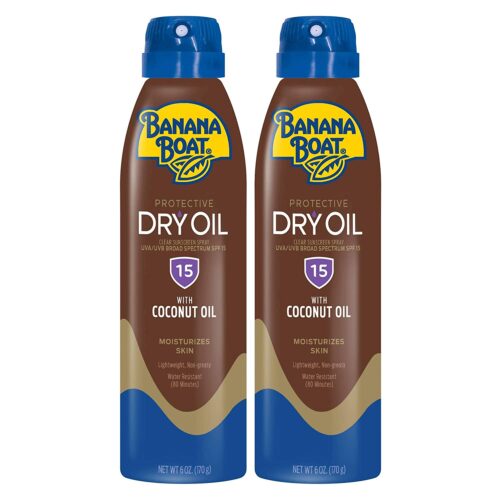
Banana Boat has sold several tanning oils and sprays with different protection levels. The “Deep Tanning Oil” name alone does not establish that a product contains sunscreen.
Check whether the exact bottle has a Drug Facts panel, a broad-spectrum designation, and an SPF. Do not substitute a no-SPF oil for sunscreen.
Do not assume an older and newer formulation share the same filters or ingredient exclusions. Read the current bottle instead of inferring reef safety from the product family.
If the selected version is SPF 15, it is below the SPF 30-or-higher baseline used here. Look for an adequate higher-SPF product for protection outdoors.
Check the exact water-resistance rating and follow its reapplication directions. A spray’s oil texture does not stop it wearing off in water or when towel drying.
Coconut oil may contribute to a softer skin feel if it is included, but it does not prevent UV damage or provide the bottle’s tested SPF by itself.
Main limitation: similarly named oils can have different SPF levels or none. Coconut oil also does not guarantee that skin will not peel after UV exposure.
7. Bronzo Sensuale SPF 15 Sunscreen

Bronzo Sensualé sells carrot-oil and lotion products in more than one SPF. Match the format and protection level rather than assuming a product photo identifies both.
The brand’s SPF 15 lotion page describes a botanical-rich moisturizing formula. That is not the same as a verified promise of a safer tan.
Check the current ingredients if plant oils or fragrance irritate your skin. Organic wording does not guarantee tolerance.
Who it may suit: someone comparing a moisturizing lotion texture. Try the feel in the amount needed for full coverage.
Hypoallergenic marketing is not a guarantee for every skin type. Check the intended face/body use and avoid the eyes when applying.
Main limitation: the SPF 15 entry is below this guide’s baseline. The brand also lists SPF 30 products, but confirm their broad-spectrum labeling and current directions before choosing one.
8. Hawaiian Tropic Silk Hydration Clear Spray

Hawaiian Tropic’s hydration clear spray is an option for shoppers who prefer a light spray finish. Packaging may use Silk or Weightless Hydration wording, so match the selected SPF and current label.
Choose an SPF 30-or-higher version rather than picking SPF 15 based on how easily you tan. The Weightless Hydration Clear Spray SPF 30 page lists broad-spectrum coverage and 80-minute water resistance.
A clear finish may be convenient across skin tones, but it makes missed areas harder to see. Spray generously and spread evenly by hand as directed.
A claim about hours of moisturization is not a claim about hours of sunscreen protection. It does not replace the label’s reapplication schedule.
The listed botanicals are part of the skincare formula. They do not independently prevent sunburn.
Who it may suit: someone wanting a clear, lightweight SPF 30 spray. Main limitation: it is fragranced and needs careful application to avoid gaps.
9. Sun Bum Original SPF 30 Sunscreen Spray

The Sun Bum Original SPF 30 Sunscreen Spray page confirms broad-spectrum protection and 80-minute water resistance. It fits the SPF baseline used in this guide.
A non-comedogenic description does not promise that every user will avoid breakouts. Check the current ingredients and how the finish feels on your skin.
Who it may suit: someone who prefers a spray and will take time to rub it in thoroughly.
SPF 30 is a starting point for outdoor use across skin tones. It is not a way to tan safely or a reason to extend sun exposure.
The brand’s oxybenzone- and octinoxate-free wording is an ingredient statement. It does not establish universal reef safety.
The current ingredient list includes fragrance and a high proportion of denatured alcohol. If those tend to sting or dry your skin, compare a fragrance-free lotion instead.
Main limitation: the clear spray makes underapplication easy. Coverage matters more than whether the product feels weightless.
Follow the brand’s reapplication directions: after 80 minutes of swimming or sweating, immediately after towel drying, and at least every two hours outdoors.
10. Neutrogena Beach Defense Sunscreen Spray SPF 30
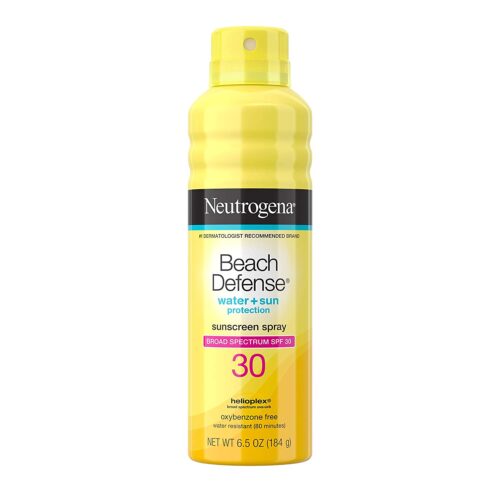
The Neutrogena Beach Defense SPF 30 Spray page lists a lightweight, oil-free spray with broad-spectrum coverage.
Its SPF 30 fits this guide’s baseline. Choose a higher SPF if preferred, while keeping the same need for generous application and reapplication.
No sunscreen guarantees that you will never burn. Combine this product with shade and protective clothing, and avoid using it to prolong deliberate sun exposure.
Helioplex is Neutrogena’s sunscreen-technology name. Compare the tested SPF and broad-spectrum label rather than assuming a proprietary name makes it superior to every alternative.
The brand lists 80 minutes of water resistance. Check the bottle’s instructions for swimming, sweating, and towel drying rather than treating it as waterproof.
Who it may suit: someone wanting an oil-free SPF 30 spray. Main limitation: spray coverage requires care; avoid mist inhalation and use hands to apply it to the face as directed.
11. Panama Jack Sunscreen Tanning Lotion
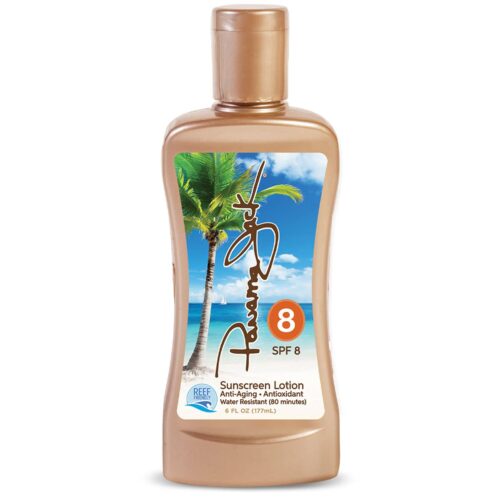
The Panama Jack SPF 8 lotion listing describes a moisturizing lotion with a Cucumber Melon scent.
Its ingredient exclusions and cruelty-free positioning do not change the SPF. Check those preferences separately from the level of sun protection.
Main limitation: SPF 8 is too low for the SPF 30-or-higher buying baseline in this guide. It is retained as an original product example, not a preferred sunscreen choice.
Darker skin and a history of rarely burning do not make SPF 8 the right choice for deliberate sun exposure. Choose adequate protection across skin tones.
Do not try to create a higher SPF by mixing this lotion with another sunscreen. SPF values do not add together, and mixing changes the tested formula.
Antioxidants do not compensate for a low SPF or establish an anti-aging benefit from the finished lotion.
For a similar lotion format, choose a broad-spectrum SPF 30-or-higher product instead and apply it without mixing in tanning oil.
Can You Still Tan While Wearing Sunscreen?
You can still notice a tan while using sunscreen because no sunscreen filters out all UV radiation. That color change does not mean the exposure was harmless.
Do not choose SPF 15 instead of SPF 30 to make tanning easier. The goal of sunscreen is to reduce UV exposure, not to find a “safe” amount that produces a tan.
For the look of a tan, use a self-tanner or cosmetic bronzer without seeking UV exposure. Continue using sunscreen outdoors; sunless color is not SPF.
Choose the SPF 30-or-higher lotion or spray you will use generously and consistently. Compare the finish and ingredients, then follow its label rather than relying on tanning claims.
Sunscreen And Tanning FAQs
Does SPF 50 Stop You From Getting A Tan?
SPF 50 reduces UV exposure when used correctly but does not block all UV radiation. Do not apply less or spend longer outside to compensate. If you want a deeper-looking complexion, use a sunless tanning product rather than trying to defeat your sunscreen.
Can You Wear Sunscreen Over Self-Tanner?
Yes. Let the self-tanner develop and complete any rinse steps as directed, then apply sunscreen normally before going outdoors. Do not mix the two products together or count the self-tan color as protection.
Related Articles
How To Remove Sunscreen From Car Interior


