
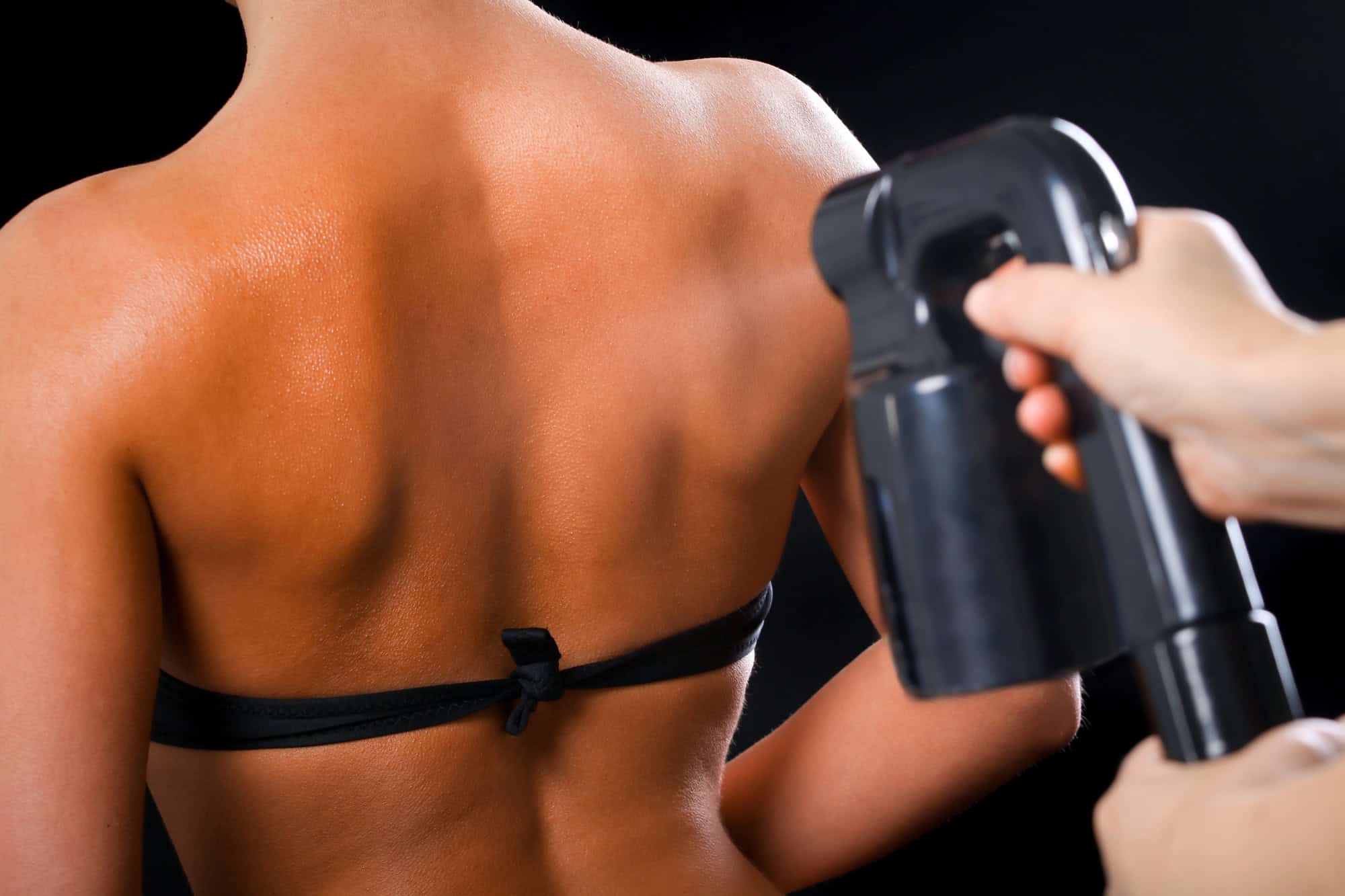
How Long Does A Spray Tan Last? (And How To Stretch It)
A spray tan usually lasts about 5 to 10 days, with gradual fading during that time. Around a week is a useful planning estimate. The solution, your skin, preparation, and everyday washing or friction all affect the result; a shorter-lasting tan does not automatically mean you did something wrong.
The first rinse matters, but it is not the whole story. After the color develops, an even application and gentle aftercare can help it fade more smoothly.
Here’s a realistic timeline, what can shorten a spray tan, and how to plan touch-ups without layering new color over patchy old tan.
The Spray Tan Timeline, Day By Day
Most spray tans use dihydroxyacetone (DHA), which reacts with amino acids in the outermost skin layer. The developed color is different from the temporary bronzer that some solutions leave on the surface. Full development can continue for around 24 hours, depending on the formula. For example, MineTan’s Dark Ash directions describe continued color development after the first rinse.
Days 1 to 2: the color develops. If the solution contains a guide bronzer, some brown color washing away at the first rinse is expected. A rapid tan may look lighter immediately after rinsing and deepen later, so do not judge its final shade too soon.
Days 3 to 6: the color may still be quite noticeable, though some fading can already occur. These are guideposts, not fixed peak-color days for everyone.
Days 7 to 10: many tans are visibly fading or mostly gone as colored surface cells shed. Dry patches and friction can make that fade uneven despite careful aftercare. Some people retain a faint tint longer, but that is different from a fresh-looking tan.
Your face may fade sooner than your body because of cleansing, makeup removal, and skin-care products. There is no reliable rule that it will fade a set number of days ahead.
Hands can lose color quickly with frequent washing. Keep washing as usual, and use a moisturizer you tolerate afterward if they feel dry. Do not skip normal hygiene to preserve a tan.
The First 24 Hours: Development And Your First Rinse
Ask your technician for the solution’s name, exact rinse time, and when you can resume normal washing, exercise, and moisturizing. Keep those instructions handy rather than relying on a generic schedule.
Wait the right amount of time before your first rinse. Conventional solutions may require several hours or an overnight wait; rapid formulas often allow an earlier rinse. The correct time depends on the product and desired shade. Our guide to the first shower after a spray tan explains the difference between a light rinse and a normal wash.
Stay dry during the instructed development period. Sweat, rain, or water splashes can leave marks before the tan has set. Wear loose, dark clothing and plan around workouts. Do not automatically leave a rapid solution on overnight: a longer wait can change the shade beyond what you intended.

How To Make A Spray Tan Last Longer
After development, focus on keeping your skin comfortable and minimizing unnecessary rubbing. You cannot stop natural shedding, and no aftercare routine guarantees extra days of color. Spray-tan color does not replace sunscreen: use broad-spectrum SPF 30 or higher outdoors, reapply as directed, and seek shade.
Shower gently. Use lukewarm water, a cleanser your skin tolerates, and your hands rather than a scrub mitt. Pat dry. A sulfate-free label alone does not guarantee a cleanser will be mild or preserve your tan.
Moisturize regularly. Apply lotion once daily, or more often if your skin feels dry, after the salon says it is suitable. This can help reduce the appearance of dry, uneven patches; twice-daily moisturizing is not a guaranteed way to add days.
Consider a gradual tan extender if you want to maintain color. Check its ingredients and directions: some add a little DHA, while others mainly moisturize. Added DHA is fresh color, rather than proof the original spray lasted longer. Compare options in our best spray tan extenders guide, and avoid coating areas that are already patchy or too dark.
These activities and products can make fading more noticeable:
- Extended swims and long soaks in pools or hot tubs
- Long hot baths and rubbing hard with a towel
- Exfoliating acids, gritty scrubs, or scrub mitts
- Skin-care products that cause dryness or peeling on tanned areas
- Tight straps or clothing that repeatedly rub the same spot
What Shortens A Spray Tan
Before blaming the solution, check the preparation and application conditions:
- Rinsing earlier than your solution’s instructions allow
- Applying lotion or other products before development when the salon advises against it
- Starting with very dry, flaky, or patchy old tan
- Swimming, heavy sweating, or sauna use before the tan has developed
- Shaving irritated skin or dragging a razor repeatedly over the same area
- Uneven application or residue from products the salon asks you to avoid before spraying
Here is how those factors can affect your tan, and what you can reasonably do about them.
Swimming. Long soaks, pool or sea water, and towel rubbing can make a developed tan fade faster. There is no dependable calculation that one swim removes two days of color. Follow the salon’s wait time before swimming, then rinse off and pat dry afterward.
Sweat and friction. Workouts can leave marks during initial development; later, tight clothing and repeated rubbing may wear color unevenly. Resume exercise when your solution’s instructions allow, then shower gently. You do not need to avoid normal activity for the whole week.
Retinoids and exfoliating acids. Some skin-care routines can make facial color fade faster, especially if they cause peeling. Retinoids are not simply scrubs. Do not stop a prescribed treatment just to keep a spray tan; ask your clinician if irritation makes you unsure about combining it with tanning products.
Prepare before the appointment. Gently exfoliate rough skin or patchy old tan, allowing any irritation from exfoliation or hair removal to settle before spraying. Avoid aggressive scrubbing on sunburned or broken skin.

Spray Tan Vs Self-Tanner: Which Lasts Longer?
A salon spray and an at-home DHA tanner color the same outer skin layer, so their wear times overlap. Neither format is automatically longer-lasting; formula, coverage, and aftercare matter.
A technician can help cover hard-to-reach areas and choose a suitable shade, but professional application does not guarantee ten days of even color. For context, Norvell describes its Venetian professional solution as lasting five to seven days.
An at-home mousse or lotion can also last around a week, depending on the product. It takes more effort to reach your back and blend joints, but you can reapply when needed without booking an appointment.
A bottle may cost less per application if you use it regularly. Include the applicator, the amount used, and any wasted product when comparing it with salon pricing.
Neither option is permanent. Our permanent self-tanner guide explains why surface-cell shedding makes every DHA tan temporary.
A salon spray can be useful for an event or for areas you find hard to reach; a gradual lotion can suit ongoing maintenance. Combining them is optional, and repeated top-ups can create buildup if the old color is uneven.
When To Book Your Next Session
For an event, consider booking one or two days beforehand. This gives the color time to develop and allows the instructed first rinse. If you are trying a new salon or shade, a trial well ahead of the event is more useful than assuming the result will match a previous tan.
For ongoing color, let fading guide the next appointment. Around a week may suit some people; others need longer for the old color to clear. Avoid automatically spraying over leftover dark patches, and leave skin time to recover if it feels irritated.
If a tan fades sooner than expected, tell the technician. Share the solution, rinse time, preparation, swimming or workouts, and skin-care routine. These details can help them adjust the next application, though there may not be one simple cause. Before any spray session, ask how they prevent inhalation and protect your eyes, lips, and mucous membranes, as outlined in the FDA’s sunless tanning guidance.
Related Questions
Can A Spray Tan Last Two Weeks?
A faint tint may remain for two weeks on some skin, but an even, fresh-looking spray tan usually has a shorter wear time. If you use a DHA extender, some of the later color comes from that top-up. Ten days is not a fixed maximum or a guaranteed duration.
Does Showering Every Day Ruin A Spray Tan?
Normal daily showers do not automatically ruin a developed spray tan. Follow your first-rinse instructions, then use gentle cleansing and pat dry. Long soaks, scrubbing, and repeated towel friction can speed fading; sulfate-free wording alone is not a guarantee of a mild cleanser.
How Often Can You Get A Spray Tan?
Base repeat appointments on how your tan fades and how your skin feels, rather than a fixed weekly rule. Let patchy old color fade and prepare gently before the next session. Wait if your skin is irritated, and ask the salon how it protects against inhaling the spray and exposure to eyes or lips.
Do Rapid Spray Tans Fade Faster?
An earlier rinse does not automatically mean a shorter-lasting tan. Rapid and conventional formulas can have overlapping wear times, but results depend on the solution and aftercare. Rapid refers to when you may rinse, not necessarily when the final color appears. Follow the exact solution’s directions instead of leaving it on longer to try to extend its life.


