
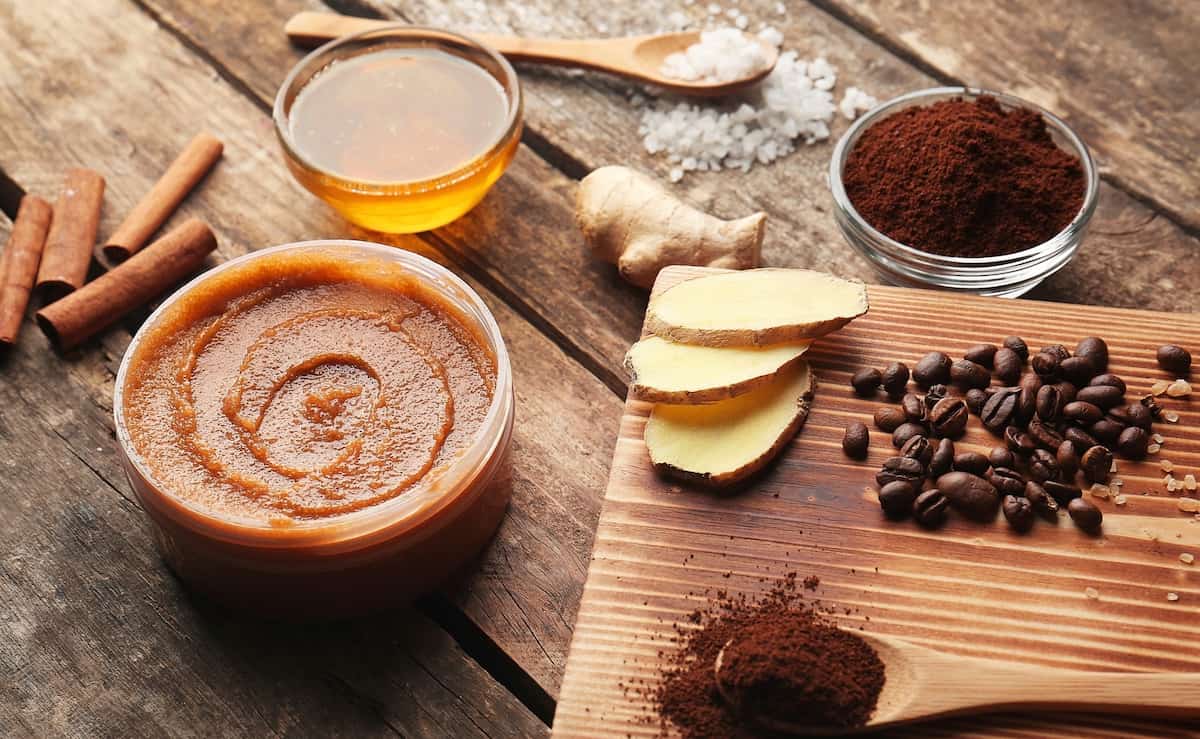
DIY Tanner Without Cocoa Powder – 5 Different Ways
Tanning in the sun is becoming less popular, with the safer alternative of using self-tanner to achieve a gorgeous glow.
You do have the option of visiting a salon to self-tan, but keeping appointments can be difficult on a busy schedule.
There are also many different self-tanning products available for purchase, but they can become quite expensive.
Most DIY self-tanners include cocoa powder, but many people dislike the feel of cocoa on their skin, and the smell may not be everyone’s favorite.
Can you make a self-tanner at home without using cocoa powder?
Yes, there are several DIY self-tanner recipes that can be made at home without using cocoa powder. You can use coconut oil, tea, coffee, carrots, and sugar to make your own DIY self-tanner that does not include cocoa powder.

Continue reading for the exact recipes and instructions on how to apply them to your skin.
5 Recipes for DIY Self Tanner Without Cocoa Powder
Here are some homemade self-tanners that are both easy to make and will give you a golden summer glow without any damage!
1. Coconut Oil and Tea
Both coconut oil and tea are readily available and commonly found in most kitchens. Mixing the two can give you a safe and moisturising self-tanner to use at home.
- Steep 4-5 black tea bags in a cup of hot water, filling it 3/4 of the way.
- Once brewed, add this tea water to half a cup of coconut oil.
- Stir the mixture well and apply it evenly over your entire body.
- Leave the coconut oil and tea mixture on your skin for 5 minutes, and then rinse off in the shower.
Your skin will be left with a brown tone, and it will be lovingly nourished thanks to the coconut oil, which helps lock in moisture and enhance the tan’s glow.
2. Carrots and Brown Sugar
This method requires a bit more effort, but it is quite effective.
- Take a pound of fresh carrots and peel them completely.
- Slice the carrots and place them into a pot of boiling water.
- Add brown sugar to the pot of boiling water and allow the mixture to simmer on low for approximately 3 hours.
- After 3 hours, strain the solution into a bowl.
- Once cooled, pour the liquid into a spray bottle and gently mist it over your skin to achieve a tanned look.
Carrots can help give you a tanned look, but they are also highly beneficial for your skin, as they contain vitamin A, natural antioxidants, and beta-carotene.
Brown sugar acts as an exfoliating agent for the skin and can even help fight against wrinkles.
3. Tea and Lotion
Once again, tea offers a great colour when it comes to self-tanner, making it a popular DIY self-tanning ingredient.
- Brew 4 black tea bags in one cup of hot water, allowing them a good amount of time to brew.
- Let the tea rest for a few minutes and mix it into a clear or white lotion of your choice.
- Apply this mixture onto your skin and allow it time to absorb.
- Once it dries, you can apply another layer for a darker colour.
- You can maintain this darker colour by applying the lotion weekly, helping to both build and maintain your natural brown tan.
The tea contains anti-inflammatory agents that help treat blemishes and soothe skin irritations. When combined with the lotion, it will keep the skin soft, hydrated, and toned.
Rclbeauty101 on YouTube has a great video using this method. Check it out!
4. Coffee and Lotion
Coffee has a high concentration of tannins, which can help to stain the skin to give the illusion of a bronze, tanned complexion.
Using coffee and lotion, you can have a self-tanner at home in almost no time at all.
You have two options when it comes to using coffee with lotion.
- Mix the instant coffee powder into the unscented lotion until it is completely blended in.
OR - Brew the coffee granules into a pitch-black liquid and then mix it into the lotion.
Once the lotion and coffee have been thoroughly mixed, massage it into your skin and allow it to dry.
You can apply this lotion once or twice weekly to maintain and build a bronzed tan.
5. DHA and Hyaluronic Acid
The self-tanners you buy over the shelf contain DHA. It is an active ingredient that works by reacting with amino acids in the dead skin cells on the skin, resulting in a dark color.
However, you will need to get the ratio perfect to avoid any risks. It is one of the trickier self-tanners to make at home, but it is also one of the most effective.
To make a DHA self-tanner at home, you will need 1 teaspoon of water, a pinch of hyaluronic acid, and 12 granules of DHA:
- Mix the one teaspoon of water with the hyaluronic acid and the 10-12 granules of DHA.
- Stir the mixture together until the DHA has dissolved.
- Massage this mixture onto the skin, leave it to sit for up to 20 minutes and then hop into the shower and wash it off. You will notice the color darkening over a few hours.
You can repeat this process weekly to build up a tan without having to step into the sun!
If you don’t want to buy the ingredients for this DIY, I highly recommend this hyaluronic-infused body tanner by the Isle of Paradise.
Other Natural Ingredients To Use
Using natural ingredients is the safest way to tan at home, without causing any additional damage to the skin.

Bean, oysters, pumpkin seeds, and sesame seeds are effective ingredients to use for home tanning.
These all contain copper, which helps to increase the production of melanin, and an increase in melanin creates a darker-looking skin.
Why DIY Self-Tanners Are Better
Many self-tanners on the market contain various chemicals, which can dry out and damage your skin.
For those with sensitive skin, finding a self-tanning product that will not cause breakouts, rashes, or blocked pores can be even more challenging.
Making the self-tanner at home means you know exactly what is going into the mixture, and you can control exactly what you can use.
Not only are the safe ingredients a huge bonus, but using ingredients commonly found at home also means you’ll save quite a bit of money.
You can try a whole host of different self-tanning mixtures at home and still not spend as much money as you would on a single bottle of self-tanner bought from the store.
Removing Self-Tanner
As with all DIY, there will be trial and error. You might take a few tries to get it right, but once you do, you will be thankful for all the work you have put in.
However, with self-tanning DIYs, mistakes can be quite obvious, and you may need to remove the self-tanner immediately.
Lemon juice is great for removing tan from the skin, learn how to do it here.
Most self-tanners, including those with natural ingredients, can be easily washed off with water.
Simply hop into a warm shower and use gentle soap to wash it off. Other self-tanners can be a bit more stubborn, so you might need to exfoliate.
Use a gentle exfoliator and an exfoliating mitt or washcloth, and gently massage your skin until the tanned surface is back to normal.
If it’s in your hair, read this guide to removing it.
Related Questions
Does cocoa powder work to tan the skin?
Most people dislike the feeling of cocoa powder on their skin or are uncomfortable with its smell, but cocoa powder can still work to tan the skin.
If you’re interested in learning more, check out this article I wrote about using cocoa powder to darken the skin.
Does baby oil help you tan?
While baby oil can help you tan, it is not the safest option for doing so.
Applying baby oil to your skin before heading out into the sun means that the sun’s rays will be more attracted to your skin, and while this will result in you tanning faster, it will cause more damage to your skin and will more than likely end up in a sunburn.
The oil intensifies the sun’s UVA and UVB rays, allowing them to penetrate more deeply into the skin, resulting in a darker skin tone.
Conclusion
There are many options available when it comes to tanning at home, which doesn’t include cocoa powder.
Some can be left on the skin for a fake tan and washed off when it is time to head to bed, and others help to develop and maintain a tan with regular application.
Whichever cocoa powder-free DIY self-tanner you use, you will be saving some money, and you will know exactly which ingredients you are applying to your very special skin!
Related Articles
Tattoos And Self-Tanner – The Essential Guide


