
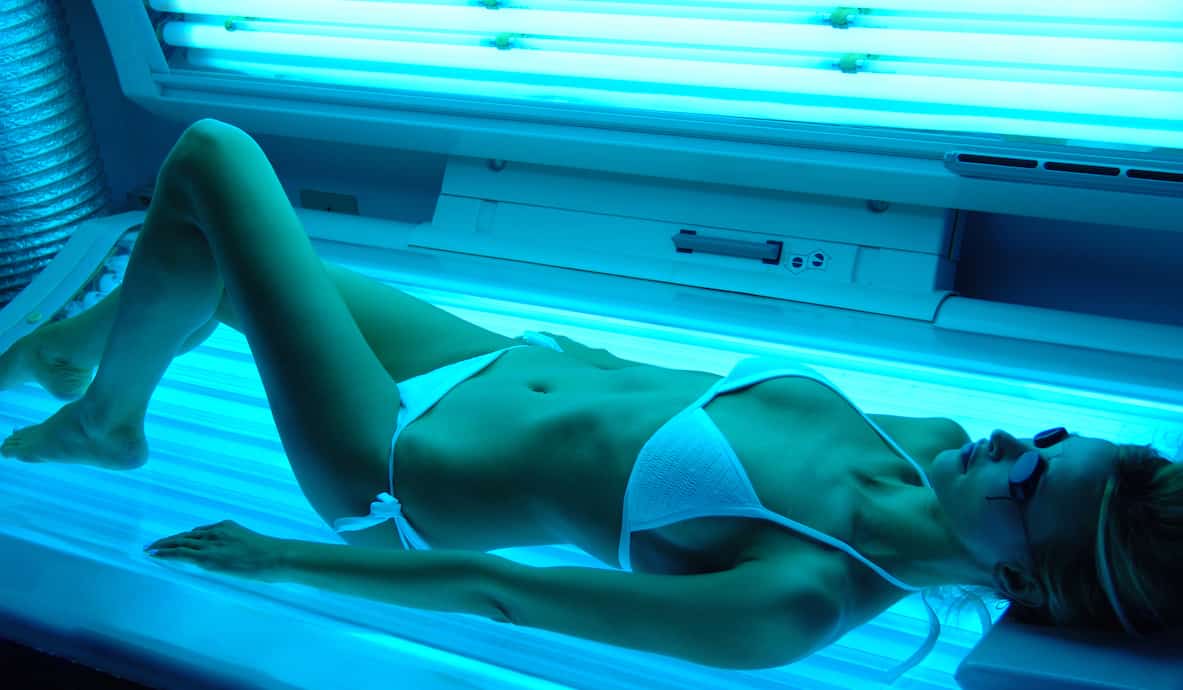
How Many Calories Does A Tanning Bed Burn?
When you think of a tanning bed, you think of golden, summer skin, perfect to show off on the beach or on a night out.
You may not initially think of weight loss and the potential calorie burning that can result from tanning in a sunbed.
Some might think that because you sweat in a tanning bed, you are burning off an excessive amount of calories, more than you would burn off lying around on the couch.
This concept stems from the idea that regular sauna sessions can help you lose weight.
The answer, however, isn’t so simple. So, can you really lose weight from a tanning bed?
The simple answer is no. You are not doing enough physical exercise in a tanning bed to burn off enough calories to lose weight. In a tanning bed, simply resting can burn around 53 calories per hour.

While this is something, it is the same amount of calories you will burn binge-watching your favorite series at home. It really doesn’t have much to do with the tanning bed itself, but rather the usual rate of calories burned by resting.
Losing Weight in A Tanning Bed
Tanning is a chemical reaction that increases melanin in your skin. This increase in melanin causes your skin to appear darker, but it does not mean you are burning calories.
Fat is only burned off when the body burns more calories than it takes in, resulting in a calorie deficit, and this cannot be achieved by using a tanning bed.
Tanning in itself does not help speed up the process of burning fat, as it does not involve any special physical activity to help burn these calories off.
So, while you might burn off some, it is not enough to result in any significant weight loss.
Does Sweating in A Tanning Bed Cause Weight Loss?
While many believe that perspiration caused by sitting in a tanning bed can lead to weight loss, this isn’t the case.
It would seem right to think that the more you sweat and the more water your body loses, the more weight you might lose.
This is fairly accurate, but water loss is temporary, and the weight will be regained as soon as you drink water.
This logic is also quite dangerous, as using a tanning bed or sauna to sweat it out and lose water weight can lead to dehydration, which can be a serious health issue.
Weight loss achieved through sweating is temporary and has nothing to do with burning calories.
Sweating does not mean you are working to burn off calories. Your body sweats in order to cool itself off. You sweat because the bulbs in the tanning salon are hot, not from calories being burned.
Once you have had some thirst-quenching water after your tanning session, your weight will more than likely be back to where it was before you got your gorgeous summer tan.
The most effective way to burn calories is by sweating naturally through physical activity.
But that doesn’t help you become tan, unless you work out for endless hours outdoors in the sun, which can cause some intense tan lines.
So what is the solution? The best way to burn calories and get a tan is by using a sweat-proof self-tanner. This is my favorite self-tanner, specifically formulated to last through a heavy workout.
How Blue Light From The Sun Might Help Burn Fat
All hope is not lost—there have been some recent studies done that have found that the blue light emitted from the sun might help shrink fat cells found just below the skin.
The fat cells that line the skin are sensitive to blue light, which is emitted from the sun.
During winter, these fat cells are shielded from the sun, allowing them to accumulate and grow, which contributes to winter weight gain.
However, during the summer months, these fat cells are exposed to sunlight and shrink when exposed to blue light.

The lipid droplets decrease in size when the blue light penetrates the skin, reaching down towards the fat cells found beneath it.
After they have reduced in size, the lipid cells are released from the cells.
In short, this means that when exposed to excess light, such as in summer, the cells do not store as much fat.
However, as promising as this study may seem, it is still in its infancy and has not yet determined the optimal amount of sunlight needed to achieve effective weight loss.
It is also not a great idea to spend too much time out in the sun or in tanning beds, as this could cause irreversible damage to your skin and, in severe cases, even lead to skin cancer later on in life.
If you are adamant that you want to spend some time in the sun to see if you do drop a few pounds, which more than likely won’t happen, or be noticeable, you should still wear protective sunscreen with a high SPF to give your skin the right protection from the sun to avoid any sunburn or other damage being done to your skin.
Tanning Bed Facts
Tanning beds are not the best way to achieve a gorgeous summer tan. They can damage your skin just as the sun does.
It is better to choose a self-tanner for use at home, which does not require UV rays to tan the skin and is generally considered safe.
Here are some more tanning bed facts that will help you decide if a tanning bed is the best option for you, whether you consider the calorie-burning factor or not.
Tanning beds are actually not safer than sun tanning
Tanning beds do not offer any magical protection from UV rays, compared to tanning in the sun.
Indoor tanning can significantly increase the risk of skin cancer, just as tanning in the sun does.
In most cases, tanning beds must be equipped with a warning label to alert users to the potential harmful effects they may cause.
Tanning beds can age your skin
Using a tanning bed can accelerate the appearance of age spots and wrinkles, as well as reduce skin firmness, more rapidly than our skin should naturally experience.
Leathery skin is a common side effect for individuals who have spent excessive time in the sun or used a tanning bed.
Tanning beds do not prevent sunburn
There is a common misconception that acquiring a base tan from a tanning bed can help protect against sunburn from the sun.
This isn’t true, and you can still burn, even with a base tan from a tanning bed.
Tanning beds do not provide you with sufficient Vitamin D
The light bulbs used in tanning beds do not give you enough vitamin D. They mostly emit UVA light, whereas your body needs access to UVB light to make vitamin D.

A healthy diet is your best bet for getting enough vitamin D safely, but supplements are also available.
Tanning beds make stretch marks more noticeable
The resultant tan from tanning beds can make stretch marks and other blemishes more noticeable.
The best way to conceal stretch marks and other blemishes is by using a self-tanner at home, where you can better control the coverage you are looking for.
If you’re looking for a self-tanner to cover your stretch marks, read this article: The Best Self-Tanners For Stretch Marks.
Tanning beds can be addictive
Studies have shown that women between the ages of 18 to 30 years can become addicted to tanning beds, and become depressed or fidgety when they do not get a steady dose of UV rays.
The Benefits of Tanning Beds
So, tanning beds may not help you lose weight, and they may come with other downsides, but there are some positives that can be attributed to their use.
Exposure to UV light has been linked to improved moods and elevated energy levels. So spending time in a tanning bed might help improve your spirits and give you a bit of a pick-me-up.
It is also believed that the improved moods are due to feeling good about your tan, which does make sense, considering a higher positivity towards body image boosts confidence.
However, the biggest benefit of tanning beds is that they can give you a great glowing tan without having to spend hours in the sun.
They might present some health hazards and skin damage, but it is probably safer to spend 20 minutes in a tanning bed rather than spending a morning basking in direct sunlight without any sunscreen.
Just remember that while it might seem that a tanning bed is doing your skin wonders at a younger age, the effects might catch up with you later on in life, with wrinkles and age spots.
Tanning and Calories
In conclusion, you will not burn more calories sitting in a tanning bed for an hour than you will lying in bed for an hour at home.
Any temporary weight loss noticed will be due to water loss, but that weight will be regained soon enough when you quench your thirst.
There is no secret weight loss trick that comes with using a tanning bed.
Tanning beds are made to help you achieve a natural-looking summer glow without having to spend hours outdoors in the sun. Remember to always protect and care for your skin.
Related Articles
Can I Use Regular Lotion In A Tanning Bed?


