
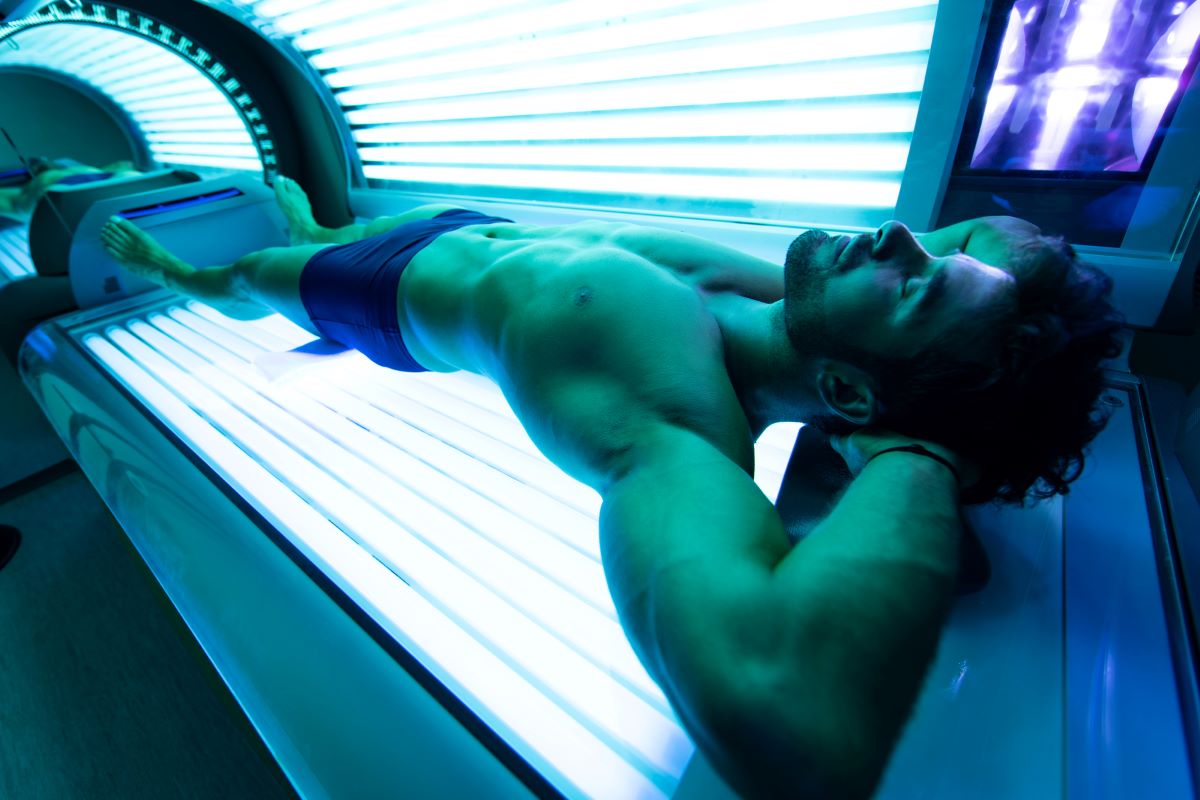
How To Protect Scars In A Tanning Bed
Using a tanning bed properly, you should be able to achieve a golden tan that is even all over.
Sometimes, if you have scars in noticeable areas, your tan might not be as even, and you might make the scars appear more evident.
Protect your scars when in a tanning bed to prevent them from tanning and appearing more obvious.
How do you protect scars in a tanning bed?
There are a few different ways that you can protect scars in a tanning bed, and it will depend on the size and severity of the scars. For smaller scars, you can use tanning stickers, and for larger scars, you could opt for sunscreen or even protective clothing to shelter them from UV rays.
Before you head off to your next tanning bed session, take a read through the below on how tanning affects scars, and how you can better protect your scars, to give yourself a beautifully even tan.
How Does Tanning Affect Scars?
Tanning is not the best way to help your scars blend in with the rest of your skin. In fact, it can actually have the opposite effect, making the scars appear more obvious against your tanned skin.
Scars need a little extra care when exposed to UV rays, as the scar tissue is usually more sensitive than the rest of your skin. The scar might also go through either hyperpigmentation or hypopigmentation, which will cause the scar to be more apparent.
Hyperpigmentation often happens in the sun, where the skin becomes darker in certain areas, and sunspots form. Hypopigmentation is when the skin becomes lighter, which can happen to scar tissue.

This means that some of the scar tissue could lighten in the sun due to hypopigmentation, whereas the skin around it could darken, creating a more dramatic contrast that makes the scar stand out more.
As the scar tissue is very sensitive, tanning could also harm the area by causing severe sunburn and even blistering.
This could then cause the skin to thicken at the scar, and this makes it even harder to treat the scar going forward.
It is best to keep scars out of UV rays, whether tanning in a tanning bed or out in the sun, and to treat them with gels and creams made specifically for scars.
How To Protect Scars In A Tanning Bed
Now that you know it is important to protect your scars when tanning, you must know how.
Here are some of the best ways to protect your scars when in a tanning bed, to prevent them from appearing more obvious and to prevent the scar tissue from becoming more damaged.
Use Sunscreen
Using sunscreen is one of the best and most obvious ways to protect yourself from sunburn in a tanning bed.
Sunscreen can be used for small and large scars, as you can apply as much or as little as you need to a certain area or to cover a few scars on your body.
When picking out sunscreen to cover your scar, look for a very high factor, such as SPF 50.
Opt for a nourishing sunscreen that will care for your skin and prevent it from drying under UV rays.
A thick lotion would be the best type of sunscreen to use to cover your scars. It will be easy to apply to small areas and will provide the best protection.
Spray sunscreen might be too difficult to use to cover small areas.
Use Special Tanning Stickers
Special tanning stickers, like these from Amazon, are made to protect small areas of your skin when in a tanning bed, such as your nipples, if you are not wearing a top.
These tanning stickers can also be ideal to cover small scars. They come in a few different shapes and sizes, and they can be pretty fun to use.
Tanning stickers can also help to tan cute shapes onto your skin, leaving the area of the shape lighter than the rest of your tan.
So you can enjoy these cute shapes all while protecting your scars from the UV rays.
Here is a great option of tanning bed stickers in a butterfly shape. These stickers will work perfectly to protect your scars and other sensitive small areas from the sun.
Wear Protective Clothing
If the scar covers a larger area where tanning stickers or sunscreen will not be effective, you could wear protective clothing.
For example, if you have a scar from a cesarean section, you could wear swimsuit bottoms that cover it.
This should not create too much difference with tan lines, as it would likely be an area covered by your swimsuit anyway.

You could also wear socks if you have scars on your feet, or a bandana to cover any wounds on your neck.
Another option is to use a bandage to cover the scarred area instead of whole pieces of clothing. Ensure the bandage is thick enough to prevent UV rays from passing through.
You can often cut the bandage to the shape and size needed to cover your scar.
Use Alternative Tanning Methods
You could use alternative tanning methods when you prefer not to risk tanning your scars and having them turn a darker or lighter than the rest of your skin.
Many different tanning methods are available that do not require time in the sun or in a tanning bed.
You could choose to use a self-tanning lotion, mousse, or gel at home and apply it to your skin for a temporary, golden tan.
To help cover scars, apply some moisturizer to your scar before applying the self-tanner to it. This will help the self-tanning product absorb better and be more even-looking with the rest of your skin.
The other popular option is to have a spray tan done by a professional at a salon.
They can help you cover your scars adequately and will give you good advice on how to cover the scars on different areas of your body.
Can You Tan Scars?
You cannot tan scars, as the results are very unpredictable. Tanning would likely make the scar appear more obvious, with it becoming lighter and in contrast to your darkened tan.
It is not a good idea to target scars for tanning either, as the scar tissue will be very sensitive, especially if it is a new scar. This could cause sunburn, blistering, and irritation to the scar.
Scar tissue will also likely become thicker when it is tanned, which can make it even more difficult to blend the scar in with the rest of the skin.

Those with naturally darker skin and a higher melanin concentration will also notice that their scars can turn darker in the sun as well, and will always be darker than the rest of their tan, making it very obvious.
Trying to tan your scars will only do more harm than good. You will not get the results you were after; most likely, the opposite.
Final Thoughts
It is so important to protect your scars in a tanning bed, to prevent them from turning either darker or lighter, and to protect the sensitive scar tissue.
When using a tanning bed, you can use sunscreen, tanning stickers, or even protective clothing to cover up scars big and small, and prevent any damage from being done.
If tanning with scars makes you nervous, you can use tanning alternatives, such as self-tanning lotions or spray tans, which will help your scars blend in and will not harm you.
If your scars are still fairly new, stay out of the sun, and always apply sunscreen when you know you will be exposed to UV rays.
Related Questions
Why can’t scars tan?
The scar tissue around scars doesn’t tan as these cells are unable to produce melanin.
Melanin is produced by healthy skin cells when they are exposed to UV rays to protect the skin, but melanin is a dark pigment, which is why tanning makes the skin darker.
What are the best ways to fade scars?
There is no quick way to fade scars, and you need to treat them properly to lessen their appearance.
The best way to do this is to use an over-the-counter scar treatment cream, which targets the skin around the scar.
Does fake tan cover scars?
Fake tan can be used to reduce the appearance of scars and can do a great job at evening out your skin tone, blending scars in with the rest of your skin color.
Related Articles
Does Fake Tan Cover Scars? – The Definitive Guide
How To Tan Faster In A Tanning Bed
How To Tan Faster In A Tanning Bed
You might also be interested in our guide on 9 Best Carrot Oils For Tanning (Ultimate Guide).


