

Does Spray Tan Help Prevent Sunburn?
A fresh spray tan can make you feel ready for the pool or beach, but bronzed skin still needs sun protection. The color does not tell you how easily your skin will burn.
A spray tan gives you a sun-kissed look without deliberately exposing your skin to UV and potentially harming your skin. It is a cosmetic color change, rather than a protective tan.
Does spray tan help prevent sunburn?
No. A spray tan does not help prevent sunburn. Its developed color provides no dependable SPF, even when it looks dark. You still need sunscreen, shade, and protective clothing outdoors. Any SPF stated on a tanning product applies only according to its sunscreen directions, not for the days the tan remains visible.
Here is why spray tans do not block UV, how to apply sunscreen over a tan, and what to do if you burn despite having that golden glow.
How Do Spray Tans Work?
Spray tans add temporary color without UV tanning. A technician can apply the solution with a spray gun, or it may be applied in an automated booth.
The main active ingredient is dihydroxyacetone (DHA), a sugar that reacts with components in the outermost skin layer. This reaction creates color over several hours; it does not create a sunscreen barrier.
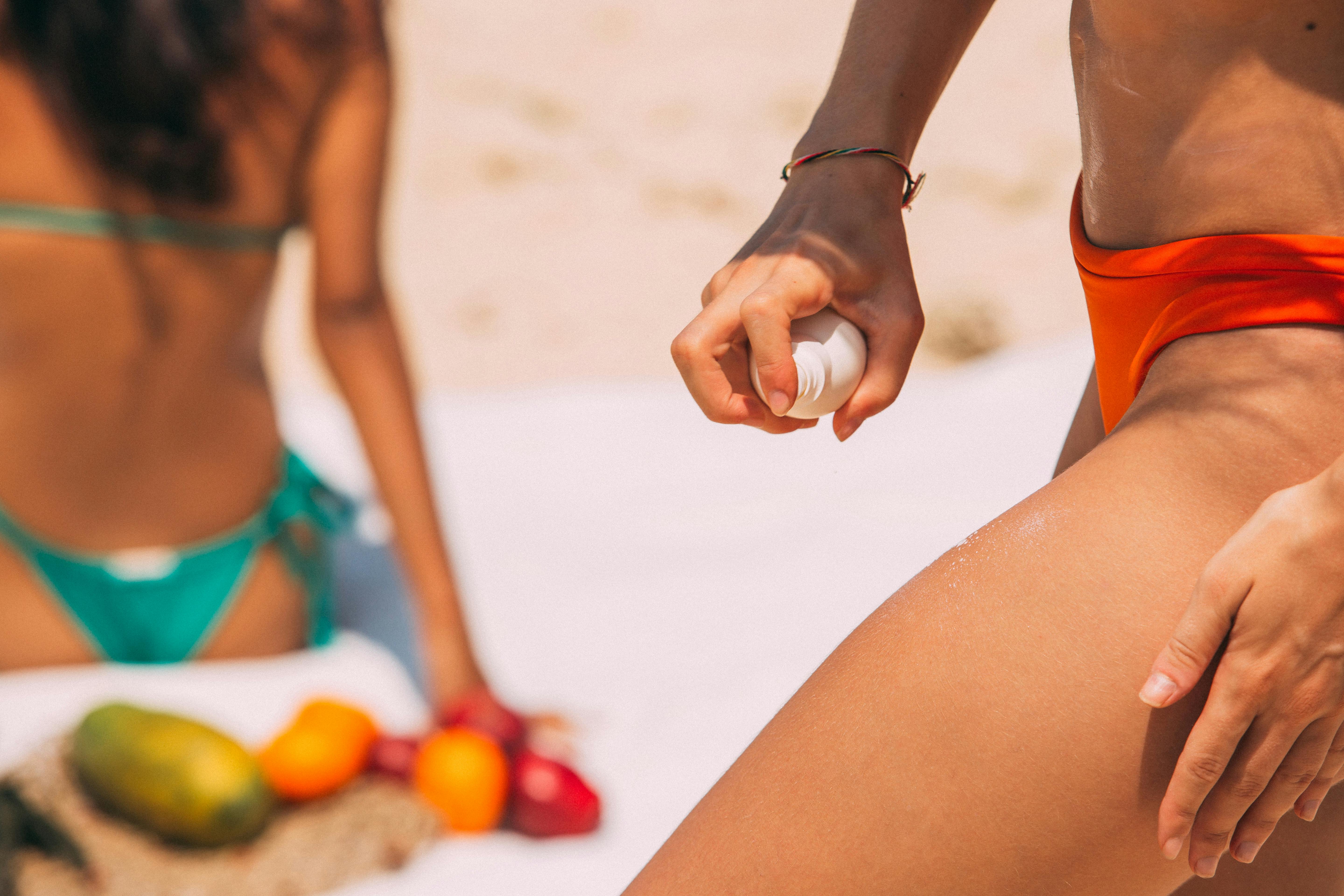
A technician can help with even application, but results still depend on the formula, preparation, and aftercare. Follow the specific rinse and development instructions rather than judging by the immediate color.
Before a spray session, ask how the eye area, lips, nose, and mouth will be protected and how inhalation of the mist will be avoided. The FDA recommends these precautions for DHA sprays.
Many formulas also contain a guide bronzer that gives instant color and rinses away at the first shower. Neither that bronzer nor the developed DHA color provides dependable UV protection.
Why Spray Tans Do Not Prevent Sunburn
A spray tan’s color does not work like sunscreen. You need a product labeled for SPF and UV protection, applied in the amount and at the intervals stated on its label.
Most sunless tanning products have no SPF. If yours does, check for broad-spectrum coverage and follow its sunscreen directions. Do not assume the protection lasts as long as the cosmetic color.
A spray tan changes surface color without producing a UV tan. A so-called base tan from the sun or a tanning bed is not a safe substitute for sunscreen either.
Even a deep spray tan leaves you vulnerable to UV damage. Your sunscreen routine should stay the same before and after the appointment.
How To Protect Skin From Sunburn With A Spray Tan
Enjoy your spray tan as a cosmetic finish, while protecting your skin as you normally would. Preserving the color should never take priority over preventing a burn.
Use these measures together to reduce UV exposure; sunscreen alone does not block every ray:
Wear Sunscreen
Choose a sunscreen suitable for use over your spray tan with broad-spectrum protection, SPF 30 or higher, and water resistance for swimming or sweating. An SPF 50 option can provide higher labeled protection, but correct application still matters.
Apply sunscreen about 15 minutes before going outdoors. Most adults need roughly one ounce to cover exposed body skin, depending on body size and clothing. Reapply every two hours outdoors and after swimming, sweating, or towel drying. These are key points in the American Academy of Dermatology’s application guidance.
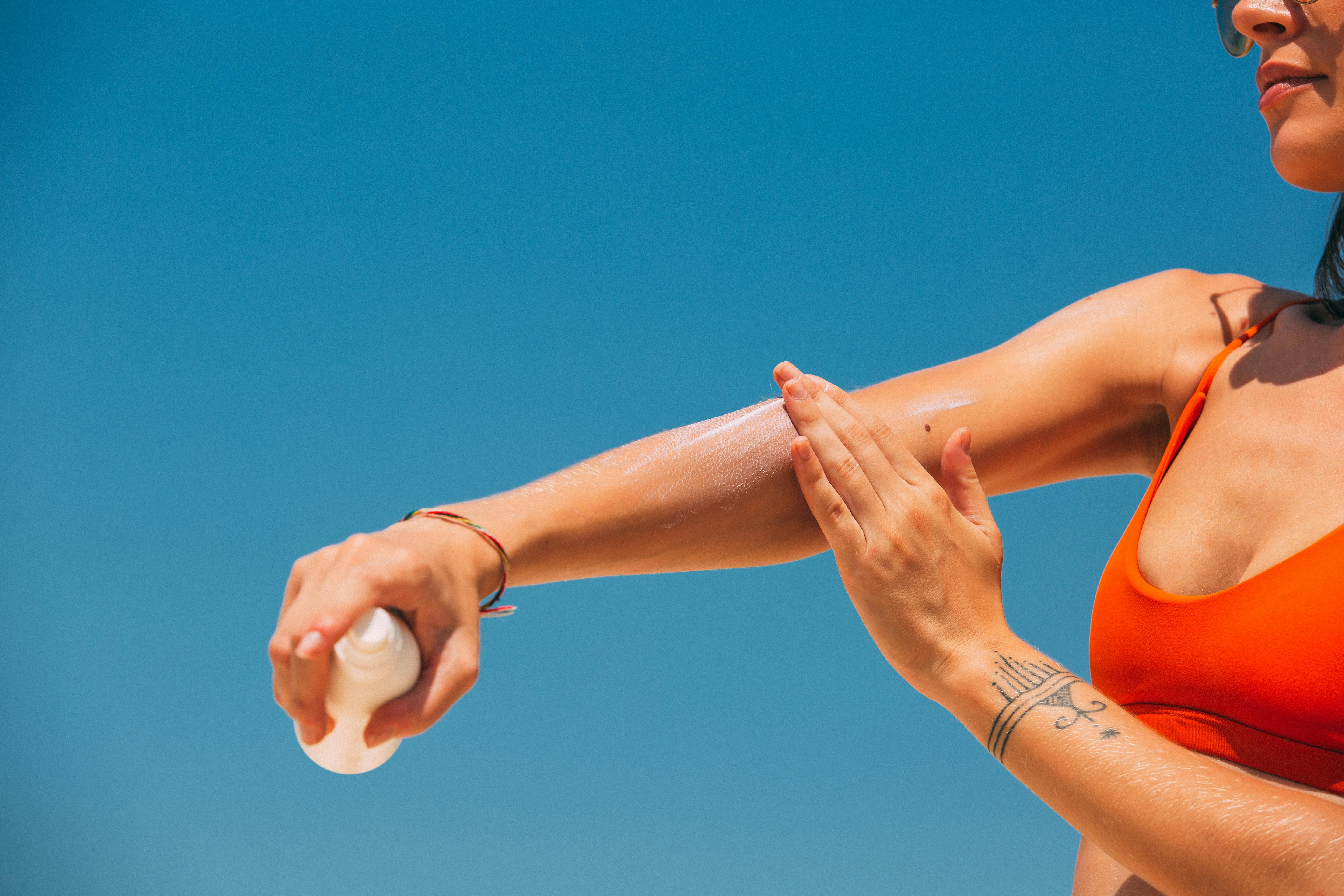
An SPF moisturizer can suit everyday use if it meets the same protection requirements and you apply enough. A thin dab is not enough for the labeled protection, and SPF numbers do not add together when products are layered. Remember ears, neck, feet, and an SPF lip balm.
Wear Protective Clothing
Clothing reduces how much skin needs sunscreen. A light cover-up can be convenient at the beach, but its appearance alone does not tell you how much UV it blocks.
Choose clothing with a stated UPF rating, such as UPF 50, or tightly woven garments that cover your arms and legs. Add a wide-brimmed hat and UV-protective sunglasses. Thin, wet, or stretched fabric may offer less protection.
Time Your Exposure
Check the local UV index rather than relying on heat or cloud cover. Seek shade and limit direct exposure when UV is high, especially around midday.
UV is generally strongest between 10 AM and 4 PM, although local conditions vary. Earlier or later outings can reduce exposure, but they do not make sunscreen unnecessary.
How Long Does A Spray Tan Last?
A spray tan usually fades over several days. Depending on the formula and routine, visible color may remain for around three to ten days; do not count on two weeks of even color.
The developed color fades as the surface skin cells naturally shed. Frequent exfoliation and friction can speed up fading, but oily skin alone does not predict how long a tan will last.
Gentle washing and regular moisturizing after the development period may help the color fade more evenly. They do not turn the tan into sun protection.
Follow your salon’s preparation and rinse advice. Avoid swimming or heavy sweating during the development window, and pat dry afterward rather than rubbing. If pool time is planned, complete the development and first rinse beforehand.
Can I Apply Sunscreen Over A Spray Tan?
Yes, apply sunscreen over a developed spray tan. Spread it gently and evenly, let it settle, and reapply when needed. Using too little to protect the color leaves your skin underprotected.
You may see advice about sunscreen ingredients to avoid, but oils or alcohol do not automatically make every formula unsuitable for a spray tan. A lotion can be easier to apply evenly than a spray; aerosol sunscreen coverage needs particular care. Choose adequate UV protection and a formula your skin tolerates rather than relying on an oil-free claim.
If your tan is still developing, ask the salon about product layering. Plan outdoor activities after the required rinse when possible. Do not delay sunscreen to preserve a fresh tan; stay covered and in the shade if you need to avoid applying other products during development.
How Does A Sunburn Affect A Spray Tan?
Sunburn can cause warmth, pain, dryness, and later peeling. It is skin damage, whether or not you have a spray tan.
If burned skin starts flaking, the cosmetic color may fade unevenly. Your priority should be soothing the burn, rather than trying to maintain a smooth-looking tan.

Because the DHA color sits in the outer skin layer, peeling can remove color along with those cells. Do not scrub, pick, or exfoliate the peeling area to even things out.
Get out of the sun, cool the area with a cool shower or damp towel, and use a gentle, unperfumed moisturizer. Avoid more tanning product until the skin has healed. The NHS recommends medical help for blistering, swelling, fever, dizziness, or feeling sick.
Does Spray Tan Help Prevent Sunburn?
A spray tan is color, not sun protection. Its shade cannot tell you your SPF or whether UV exposure is damaging your skin.
Keep using broad-spectrum SPF 30 or higher, reapply properly, and combine it with shade and clothing. The protection label and application matter more than whether a sunscreen contains oils or alcohol.
The benefit of a spray tan is getting a bronzed look without deliberate UV tanning. You can enjoy that color while keeping your usual sun-protection habits.
Related Questions
Does self-tanner protect you from sunburn?
No. The developed color from a self-tanner provides no dependable protection against sunburn, just like a salon spray tan. Use sunscreen outdoors.
A self-tanner with labeled SPF is an exception only while its sunscreen protection is being used and reapplied correctly. The color may last for days, but a single sunscreen application does not.
Can you get a real tan with a fake tan on?
Yes. UV can still reach your skin through a fake tan and cause tanning, burning, and other damage. A darker appearance is not evidence of protection, so do not use fake tan as a reason to sunbathe.


