
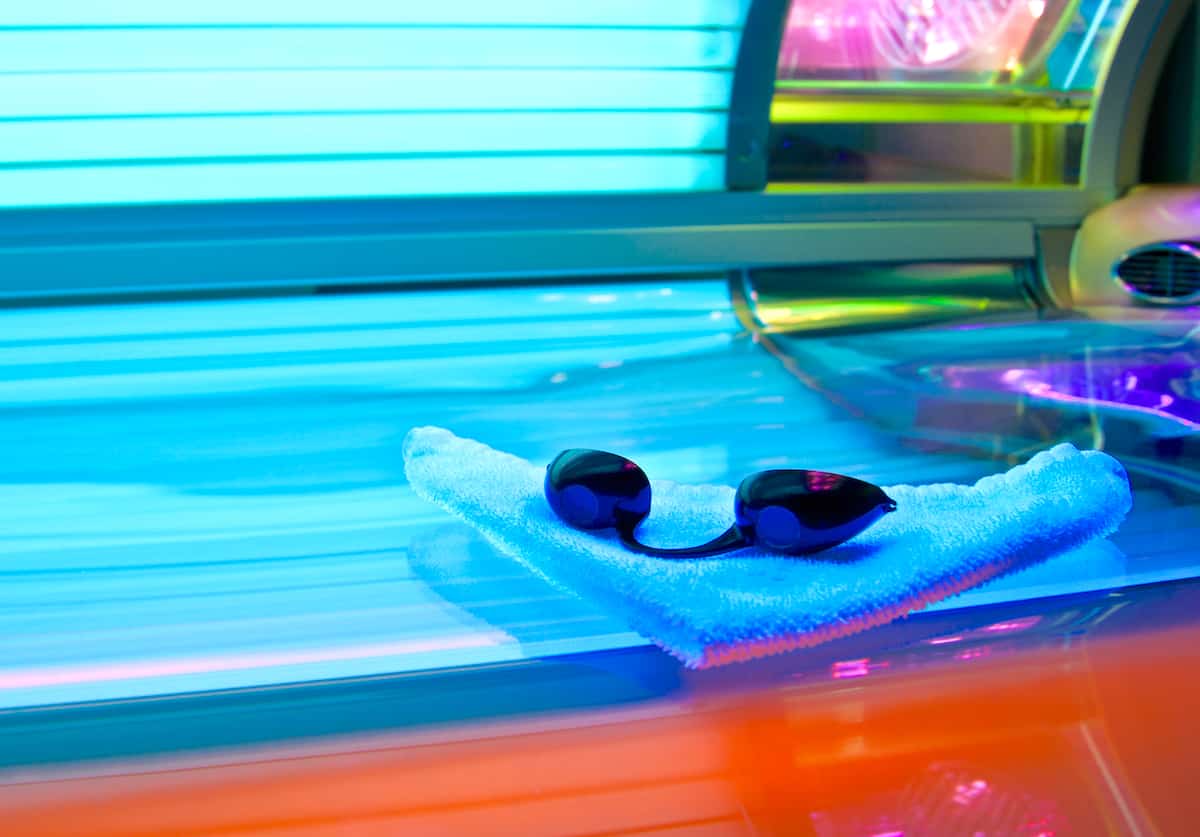
The Best Substitute For Tanning Goggles
When using a tanning bed, proper eye protection is essential. The intense ultraviolet (UV) light can injure the eyes, and simply closing your eyelids is not enough protection.
UV exposure from tanning beds can damage delicate eye tissues, and repeated exposure increases the concern. Many salons therefore require purpose-made eye protection before a session begins.
If you don’t want to purchase your pair of tanning goggles or use the reusable pair offered by the salon, you’re probably wondering:
What is the best substitute for tanning goggles?
The best substitute for traditional tanning goggles is disposable eye protection made specifically for indoor tanning, often called tanning eye stickers. They fold into small protective cones over the eyes, take up less space than many goggles, and should be replaced after each session.
Tanning eye stickers can be a practical alternative to reusable tanning goggles if they are designed for tanning-bed UV protection and used exactly as directed. Because they are compact and disposable, it is easy to keep a few unopened pairs in your bag for salon visits.
Read on to learn how tanning eye stickers work, how to use them correctly, what not to substitute for approved eye protection, and why protecting your eyes matters during every tanning-bed session.
Why You Need Eye Protection in a Tanning Bed
You need eye protection when using a tanning bed because the lamps emit UVA and UVB radiation that can injure unprotected eyes.
Tanning beds use UVA and UVB light, the same types of ultraviolet radiation found in sunlight, but exposure inside a tanning bed can be intense and close to the face.
These rays can be dangerous to your eyes without proper protection. Closing your eyes alone is not a safe substitute because eyelids do not provide the same UV protection as purpose-made eyewear.

Using a tanning bed without proper eye protection can cause painful UV injury to the surface of the eye, including the cornea. Symptoms can include pain, redness, tearing, light sensitivity, or blurred vision.
Long-term UV exposure is also associated with eye conditions such as cataracts. Eye protection is therefore not an optional tanning accessory. It is a basic safety measure. If you develop eye pain, marked redness, light sensitivity, or vision changes after UV exposure, seek medical advice rather than trying to treat the problem yourself.
The Best Substitute for Tanning Goggles
If you’re not a fan of bulky reusable tanning goggles, you can consider disposable tanning eye stickers made for indoor tanning instead.
They are smaller and easier to carry than many goggles, and keeping unopened pairs at home means you do not have to rely on shared salon eyewear. The tradeoff is that they are single-use, so you will need a fresh pair for each session.
Suggested: Wink Ease Disposable Eye Protection

The Wink Ease Disposable Eye Protection stickers are designed to fold into a small cone shape over each eye. This compact design covers less surrounding skin than many traditional goggles, which can also help reduce obvious goggle-shaped tan lines.
The key benefit is not visibility but UV protection in a compact format. Fit matters, so the sticker should form the shape shown in the product instructions and fully cover the eye area it is designed to protect.
Before using any disposable eye protector, check the current packaging for its UV-protection specifications and follow the manufacturer’s instructions. A product that shifts, opens, or does not fully cover the eye should be repositioned before the tanning bed is switched on.
Because they are disposable, you can use a fresh pair for your session and throw them away afterward. That avoids the cleaning and storage required with reusable goggles.
The gold eye stickers are a convenient choice for people who dislike bulky goggles, but they still need to be applied correctly to work as intended. Remove them gently after the session, especially if the skin around your eyes is sensitive.
How Do You Use Eye Stickers?
Eye stickers are fairly simple to use, but correct placement is important. Start by removing one sticker from the paper backing while avoiding unnecessary contact with the adhesive.
Next, fold the sticker into the cone shape shown in the product instructions, position it over the closed eye, and gently secure it. Repeat with the other eye and check that both protectors are stable before the session starts.
Make sure each protector fully covers the intended eye area without gaps. If you are unsure about the fit, ask salon staff to confirm the placement before the tanning bed is turned on.
These protectors are designed to be disposable, so use a new pair for each tanning session rather than trying to preserve the adhesive for multiple uses.
What Should You Not Use Instead of Tanning Goggles?
Regular sunglasses, contact lenses, sleep masks, cotton pads, tissues, and simply closing your eyes are not reliable substitutes for eye protection designed for a tanning bed. They may leave gaps or may not provide adequate protection from the UV wavelengths used by tanning lamps.
If you arrive at a salon without suitable eye protection, the safest option is to get approved goggles or disposable tanning eye protection before starting the session. If none is available, skip the session rather than improvising with something that was not designed for UV eye protection.
Related Questions
Can You Open Your Eyes When Wearing Tanning Goggles in a Tanning Bed?
The important point is not whether your eyes are open or closed. It is whether proper tanning eye protection is fitted correctly and remains in place throughout the session.
If your goggles are intended for tanning-bed use, follow their instructions and the salon’s safety guidance. Do not remove or lift the eye protection to look around, even briefly, while the UV lamps are on.
How Do You Prevent Raccoon Eyes in a Tanning Bed?
To reduce raccoon eyes, or noticeable tan lines around the eyes, choose properly fitting, low-profile eye protection that covers as little surrounding skin as possible while still protecting the eyes.
If a lighter ring is still visible afterward, a face-safe bronzer or foundation can help blend the color temporarily. Avoid applying tanning lotion directly on the eyelids or too close to the eyes unless the product specifically says it is suitable for that area.

Do not reposition goggles in a way that exposes your eyes to the lamps. Both eyes should remain fully protected for the entire session.
For more information on this particular subject, we have another article for you – Raccoon Eyes From Tanning – Everything You Should Know.
Can Tanning Beds Ruin Your Eyes?
Tanning-bed UV exposure can injure unprotected eyes. Simply closing your eyes is not enough, so use purpose-made tanning goggles or disposable eye protection that is designed for tanning-bed UV exposure and fits correctly.


